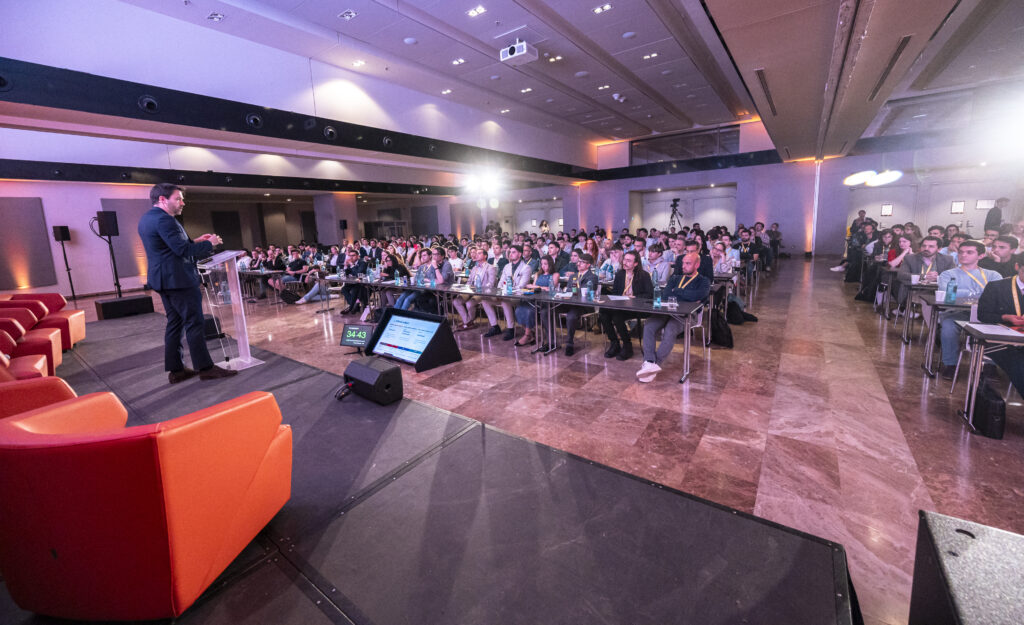
After 6 years, LibertyCon Europe returned to Madrid, with the event’s fourteenth edition on April 24-26. The last time Students For Liberty’s largest annual conference took place in Spain, it was 2020, and the event wrapped just a few days before the first lockdown started in the country.
It seems like ages ago now. And indeed many who were our students back then returned this year as speakers and changemakers with deep expertise in their fields. But while many of the main challenges liberalism now faces have changed since then, the event’s main goal of strengthening local networks and connecting friends of liberty from all over the continent and beyond, and to prepare them to take these on, has not.
Enlightening the World
The theme of this year’s LibertyCon was Enlightening the World – Iluminando el Mundo – not just a necessary call to action for friends of liberty in the increasingly challenging times, but also in reference to this year’s 150th anniversary of the first showing of Statue of Liberty’s (or in its official name, Liberty Enlightening the World) symbolic torch, and the cause for freedom and independence it was intended to celebrate.
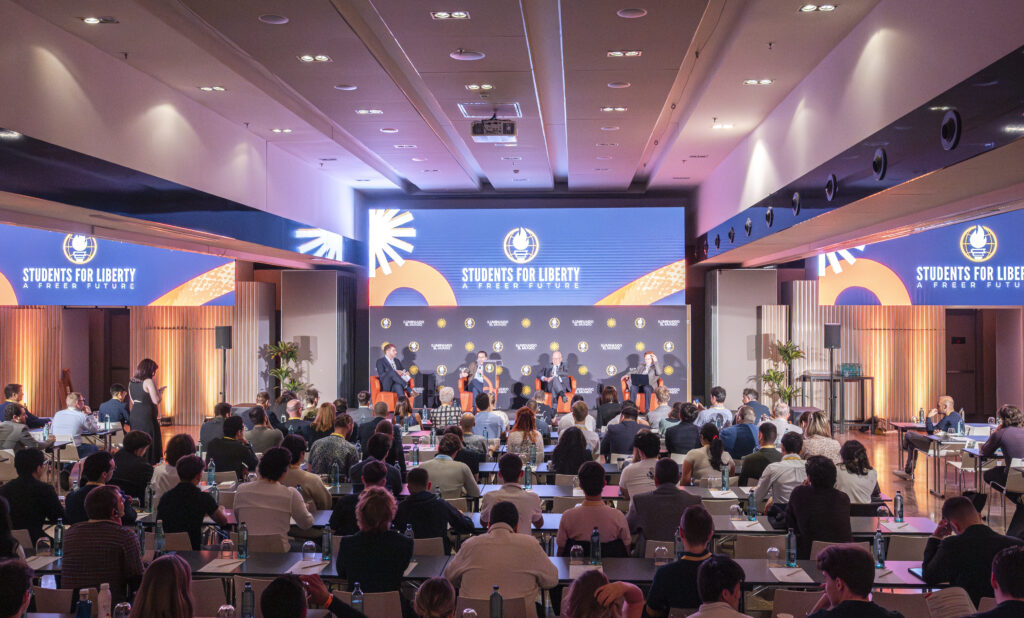
And for that purpose, we called on the leaders of the liberty movement from all over the world to join us in Madrid. Over 50 sessions, totalling over 32 hours of programming, we hosted 89 speakers, with major help from a total of 40 partners and collaborators, ranging from think tanks and universities to foundations, businesses, and international organisations.
For all that, we were joined by 641 attendees from 52 countries, many of whom attended their first Students For Liberty event.
Why here, why now?
As each year, the event had three main pillar topics: this time they were democratic backsliding and geopolitical shifts, deregulation and competitiveness, and human rights.
These key topics, which are on the forefront of discussions we are having not only in Europe, were the reason LibertyCon 2026 had to take place in Spain – not only because of its convenient location for international gatherings, but also because it is one of the examples of a country in desperate need of deregulation and economic renaissance. Finally, Spain is a host to large diasporas of refugees from Venezuela or Cuba, but also from Ukraine and other countries, who fled to Spain as their lives and livelihoods were threatened by authoritarian rulers.
What made the choice of the location even easier is that Spain is home to one of our largest chapters in Europe, with 60 Local Coordinators and over 100 volunteers, who host local events almost every week across the country.
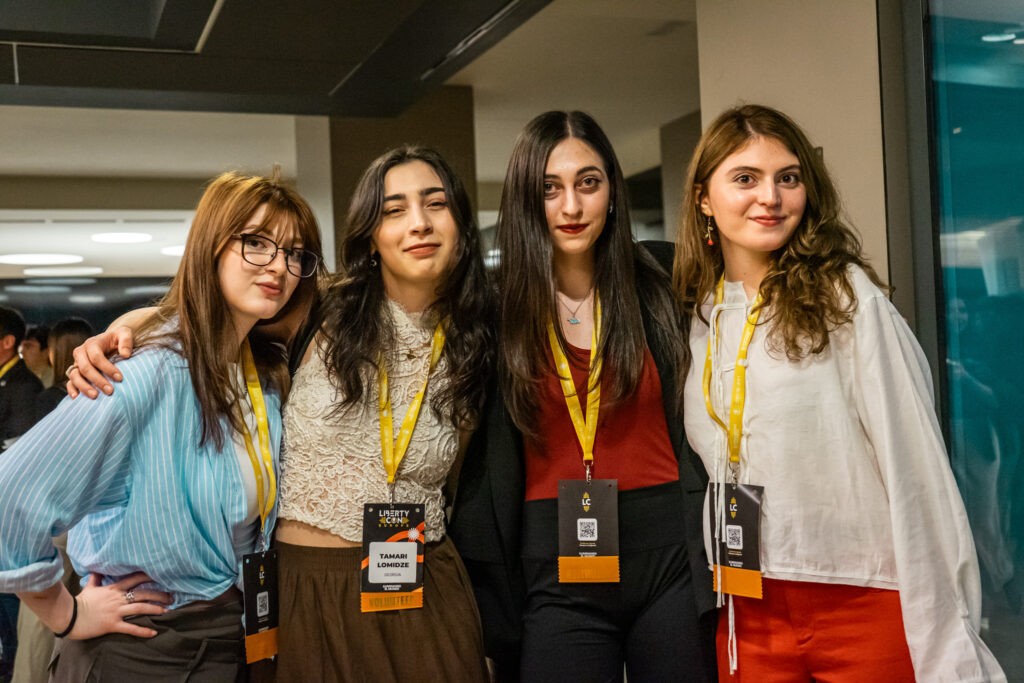
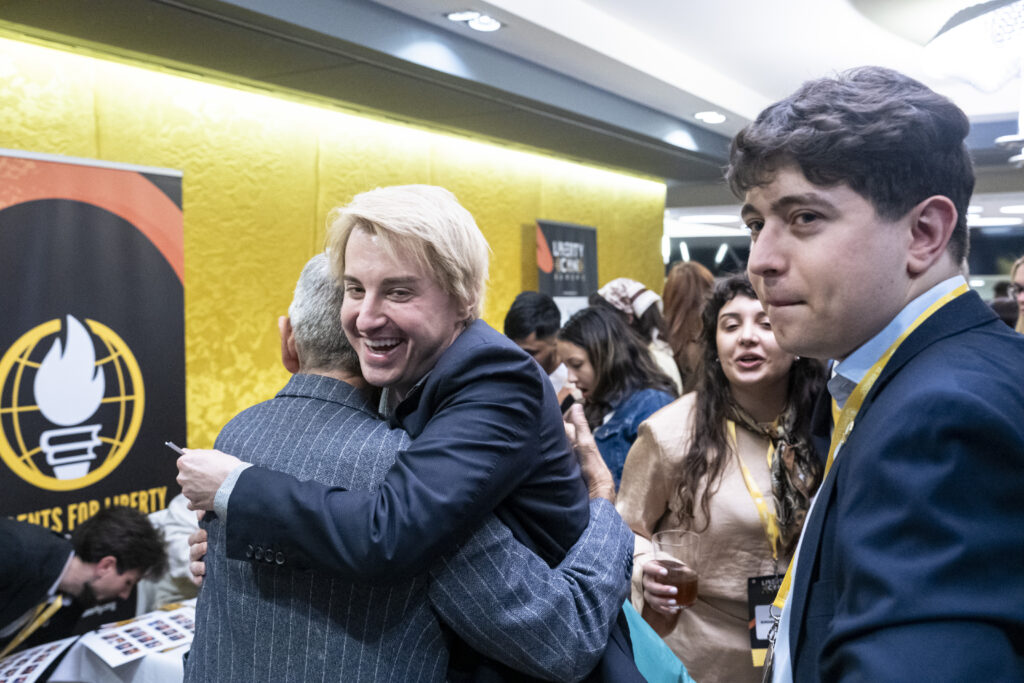
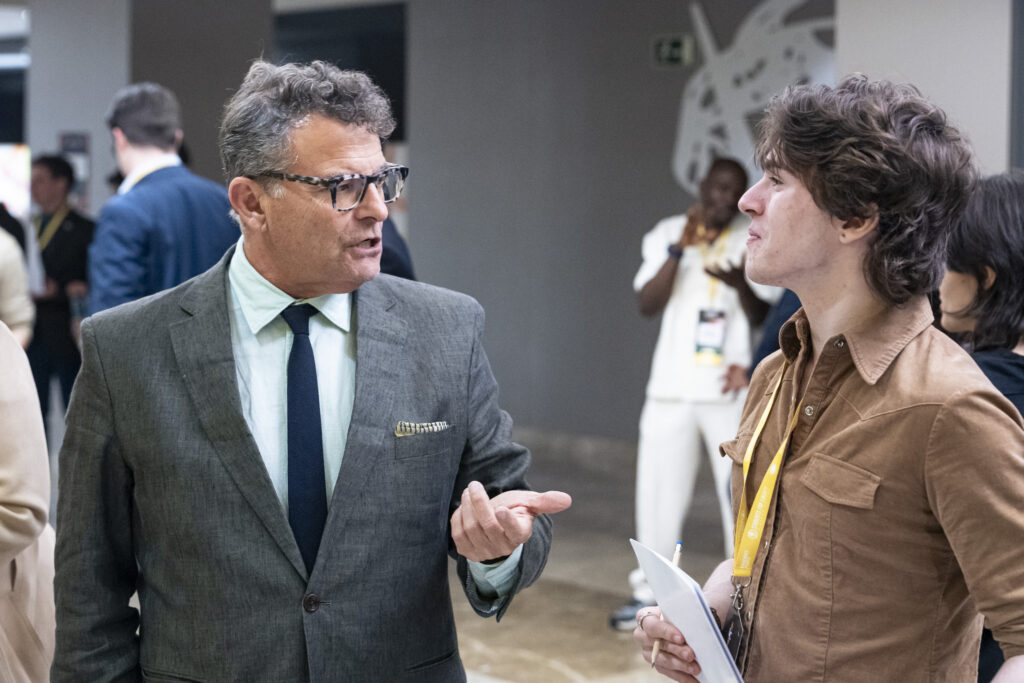
For students, by students
An essential part of the event are students – not only those who join to attend the event, but also our student volunteers, who both grow their network and develop their skill through the event.
Our volunteers running the event gain team leadership, marketing, and project management skills, or learn about managing partnerships and speaker invitations.
But our volunteers don’t only stay in the background – far from it, they take to the central stage: ten of this year’s speakers were our coordinators, and another ten were alumni of our programs.
Some gave their individual talks, like Karol Jakubčák from Slovakia, who spoke about the real impact government substance prohibitionism has on individuals who fall victim to it, or Oscar Jesus Gonzalez Mendez from the Canary Islands, who gave a presentation titled Canaries Have No Limits, a reference to the Canaries Have Limits campaign that seeks to regulate tourism and related sectors on the islands.
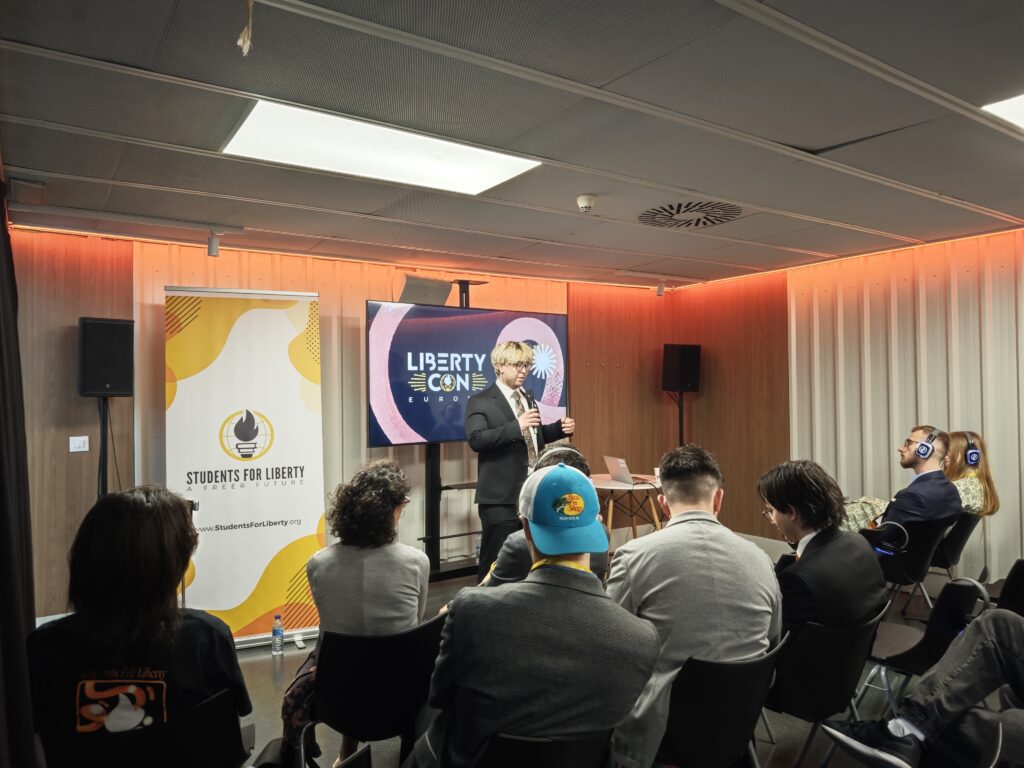
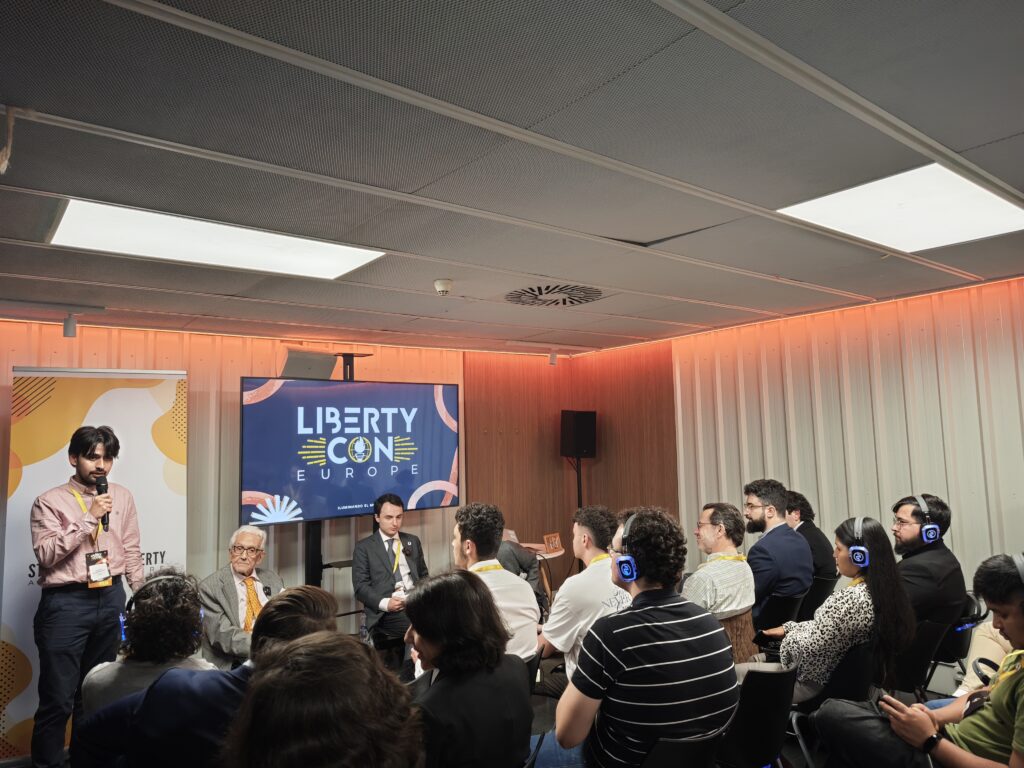
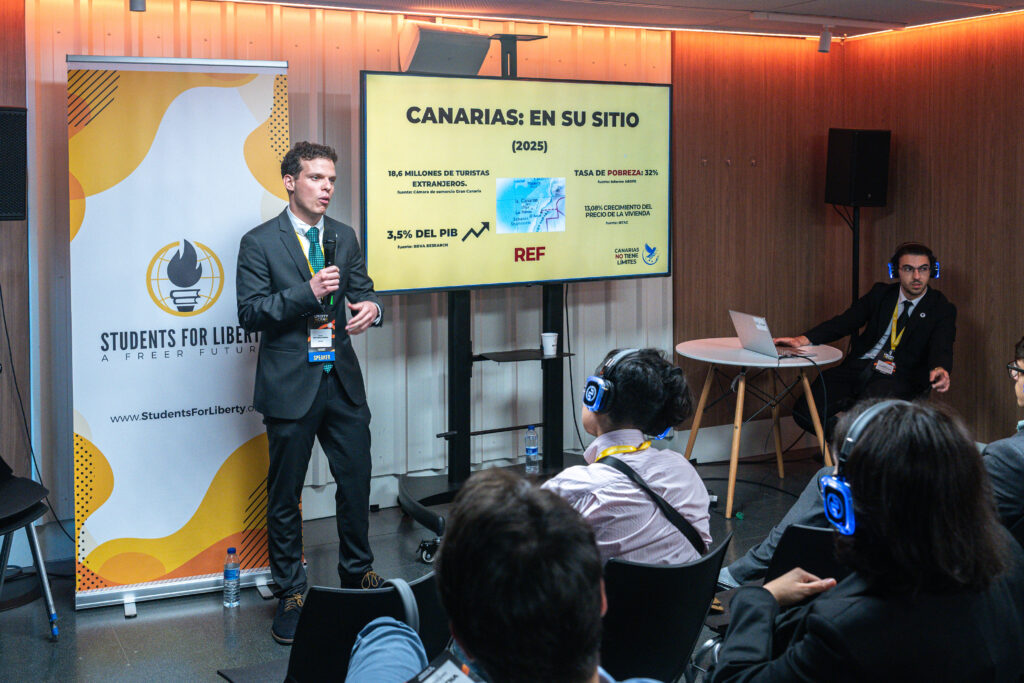
Other students spoke on panels, like our Spanish volunteer Hugo Lopez, who spoke on the packed session on housing regulation, Tania Rak who spoke about the need for deregulation across Europe, Beatriz Santos from Portugal covering digital euro and online privacy, or Jorge Munoz, who moderated two panels: on free media, and on AI. Our volunteer in the United Kingdom Anne Struffmann was one the emcees of the conference, alongside three of our alumni, on top of speaking on a session on tax policy.
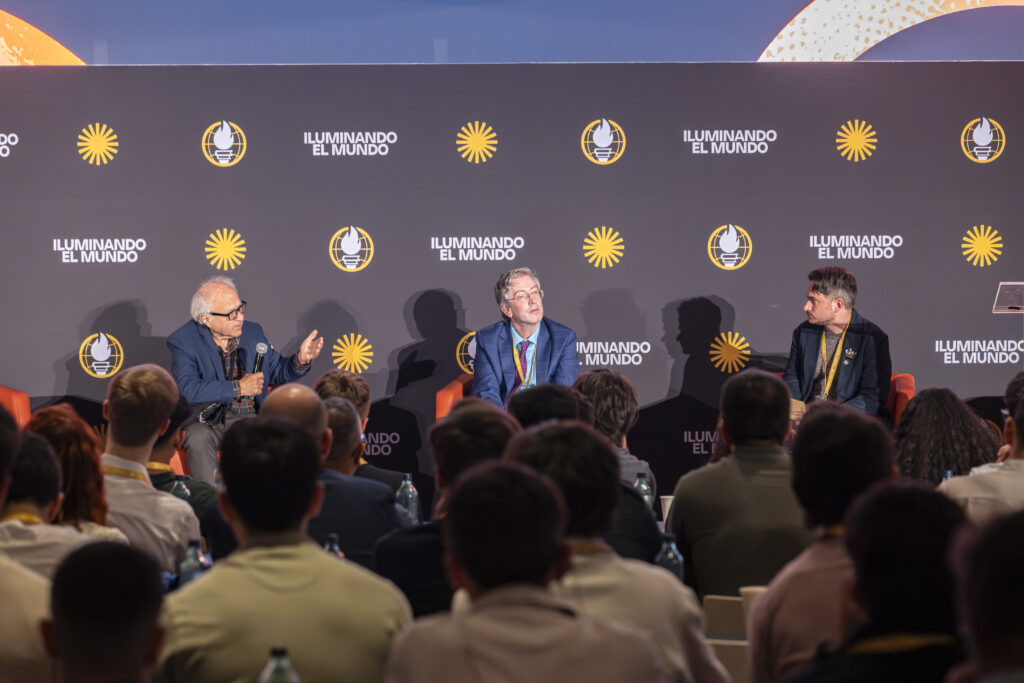
Our students also took to the main stage, with John Devlin moderating a keynote session Radical Visions for Liberty with Bryan Caplan and David Friedman.
One of the highlights of the event was a panel that covered the just-defeated Chat Control regulation, and upcoming social media age bans. The two panelists on the session were Manual Ferreti, one of our students leading the campaign, and Jorge Teixeira, our alumnus and now a member of the Portuguese parliament, with our European Director Stefan Acimovic moderating.
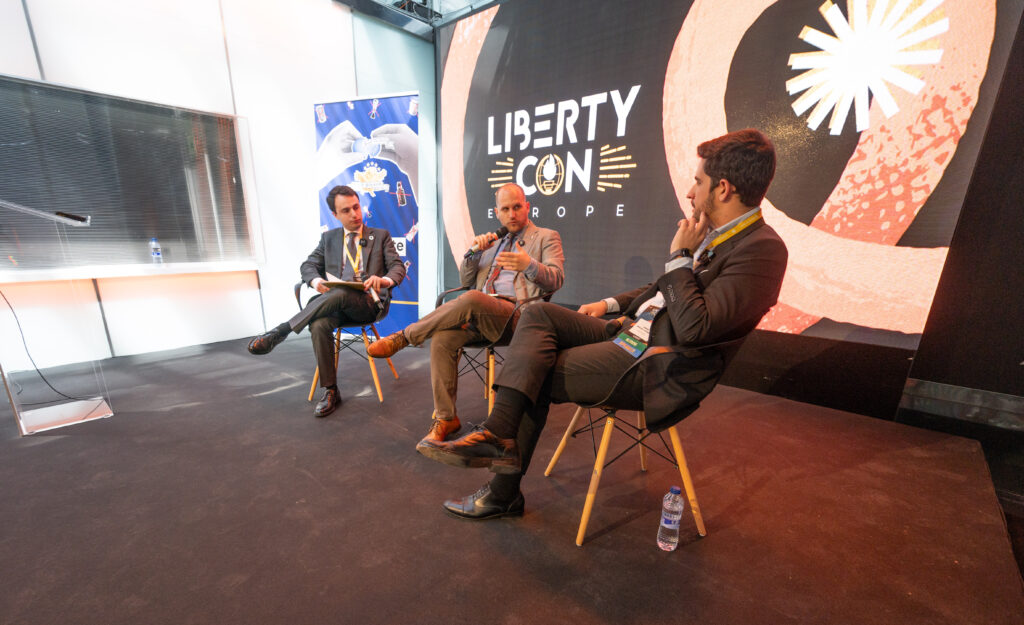
Manuel also went ahead to moderate a discussion tracing the history of Europe’s liberal movement, with Pedro Schwartz and Francisco Cabrillo, who shared their memories of working with giants like Hayek and Popper.
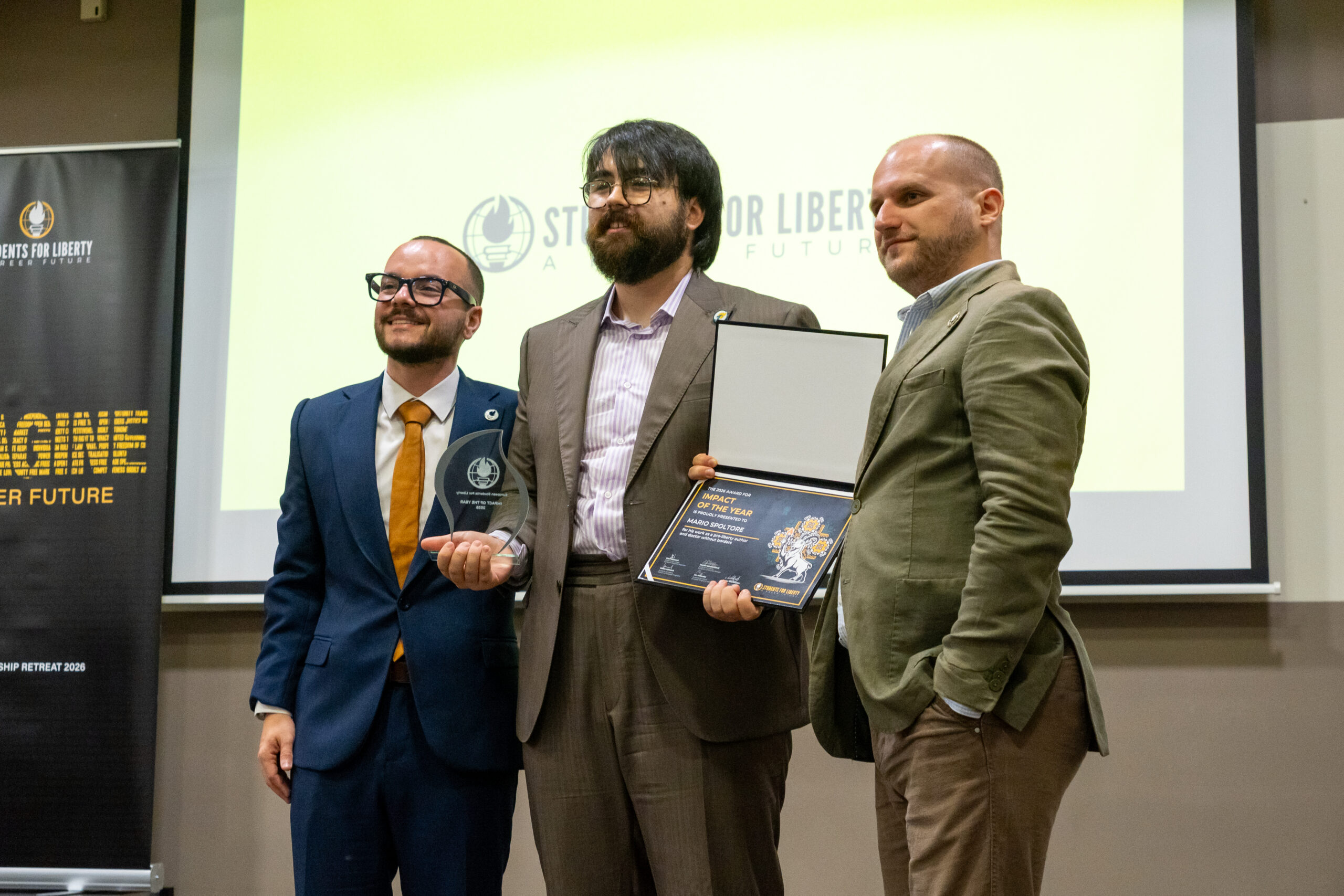
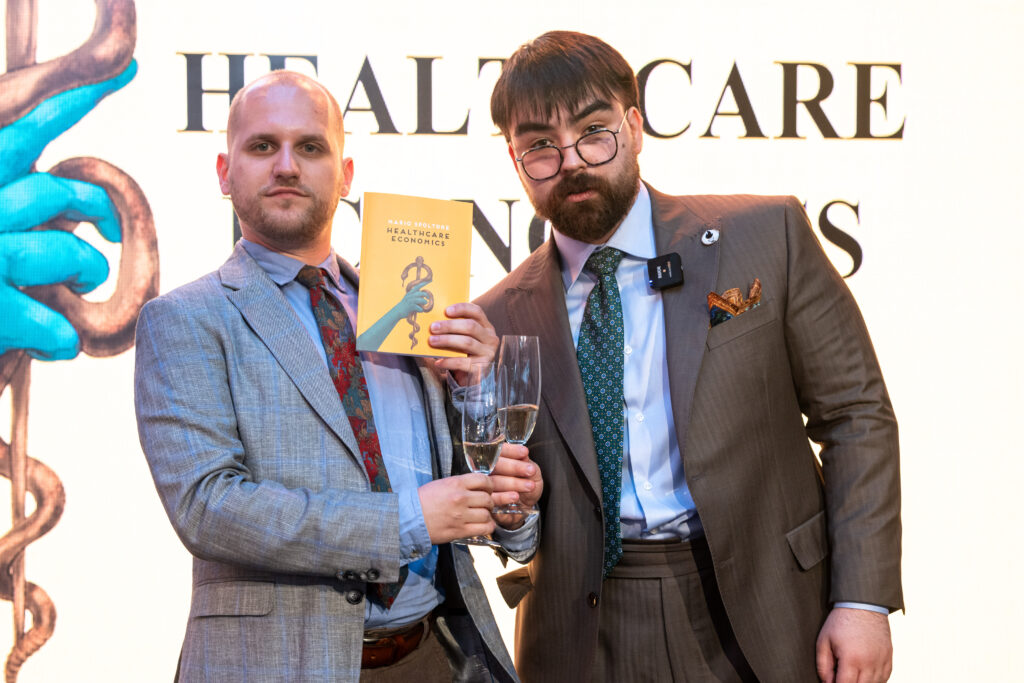
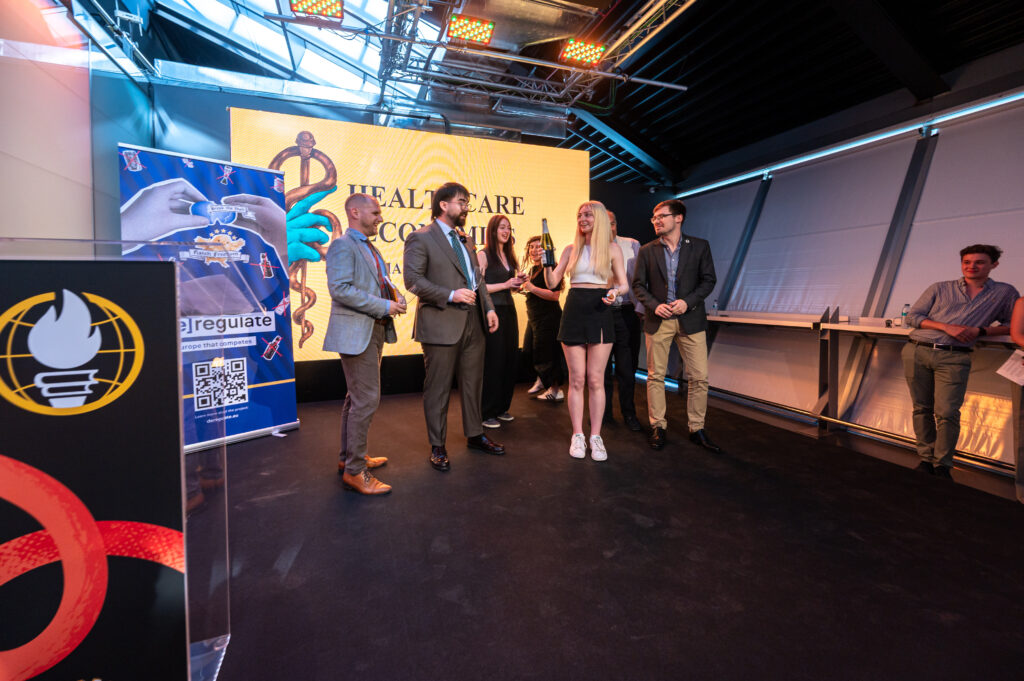
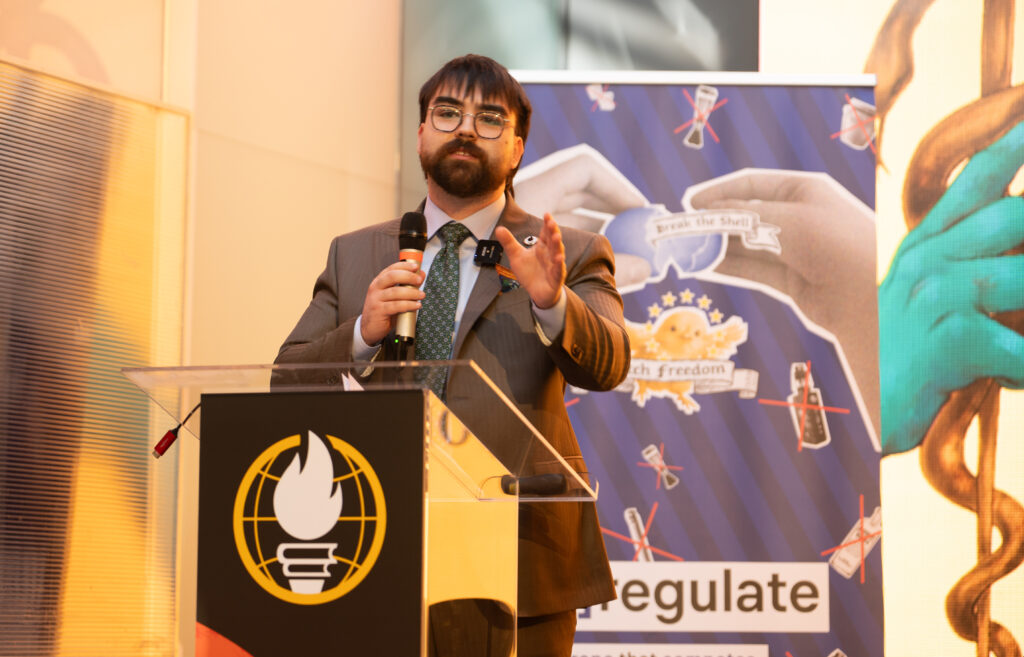
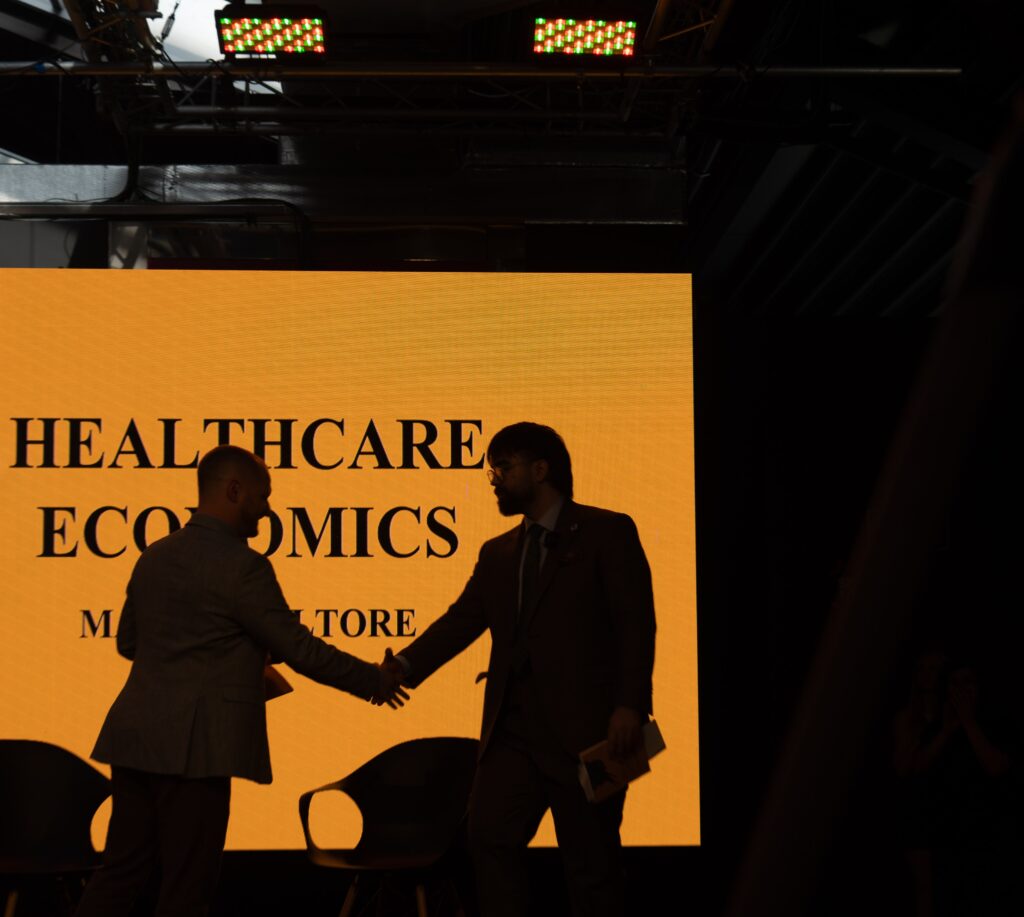
And in a very special moment and in the true Students For Liberty spirit, we celebrated the launch of a book published by Mario Spoltore, our volunteer from Italy. The book is Healthcare Economics, and in his address during the launch, Mario, an aspiring medical doctor, explained he wrote it because way too few people understand that even in healthcare, price signals matter.
A packed weekend, an all-star programme
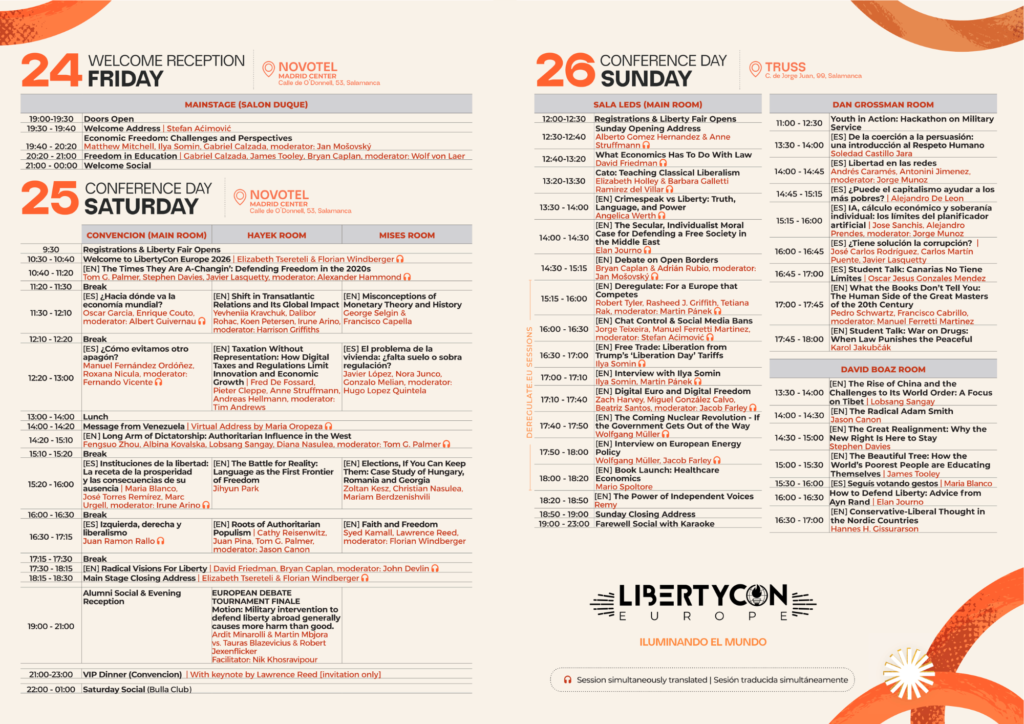
LibertyCon Europe kicked off with a now traditional Friday evening reception, with enough time for return visitors to catch up, and with two opening sessions for the first time guests to get a sense of what’s coming.
The opening talks covered economic freedom, on which we heard from Ilya Somin, Matthew Mitchell and Gabriel Calzada, and also freedom in education, for which Gabriel Calzada was joined by James Tooley and Bryan Caplan. Both conversations took a very broad angle, ranging from the threat of nationalist populism all the way to opportunities and threats from AI, in what was a great way to start the weekend.
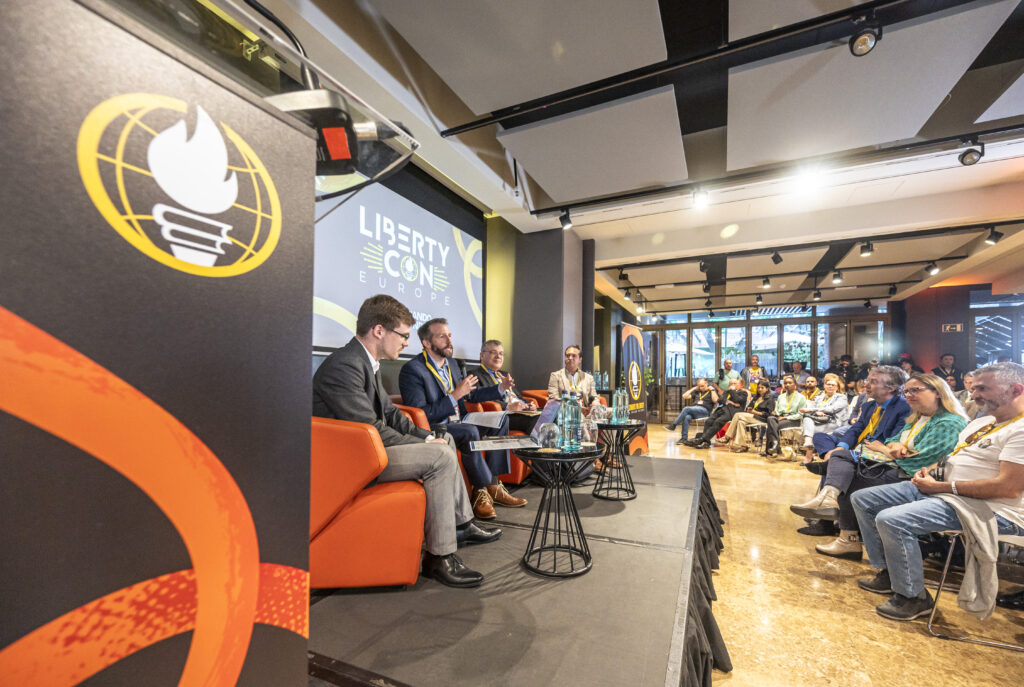
Saturday is always our main conference day, where across several keynote sessions and three parallel breakout talks, we dive deep into liberal theory, practice, and the challenges of today.
Among the topics we covered was the shift in transatlantic relations and the rise of illiberalism in the United States, Europe, and around the world.
We also covered the long arm that dictators have grown through their expanded ability to spread misinformation and influence electoral outcomes, and how regardless, these practices recently failed in Hungary or Romania.
Among the speakers who joined us on the second day to discuss these topics were Fengsuo Zhou, a student leader during the 1989 Tiananmen Square protests in China, Zoltan Kesz, a Hungarian opposition figure, Albina Kovalska from Ukraine, representing the Center for Civil Liberties, a 2022 Nobel Peace Prize laureate organisation, George Selgin, Tom Palmer, Steve Davies, Javier Lasquetty, Juan Pina, Juan Ramon Rallo, Syed Kamall, and great many other champions of liberty from around the world.
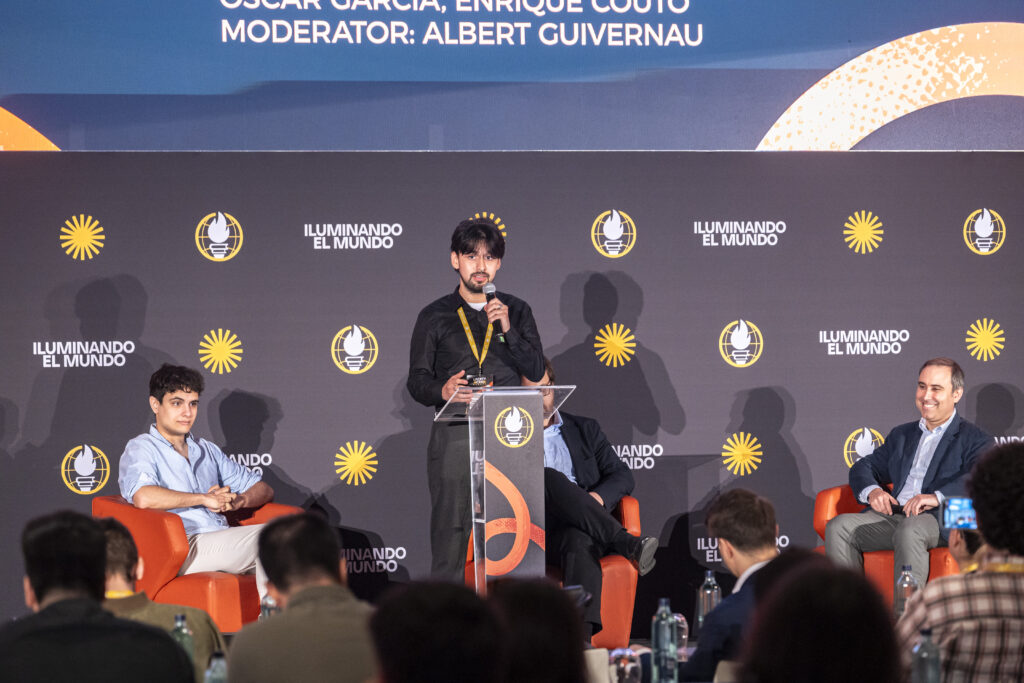
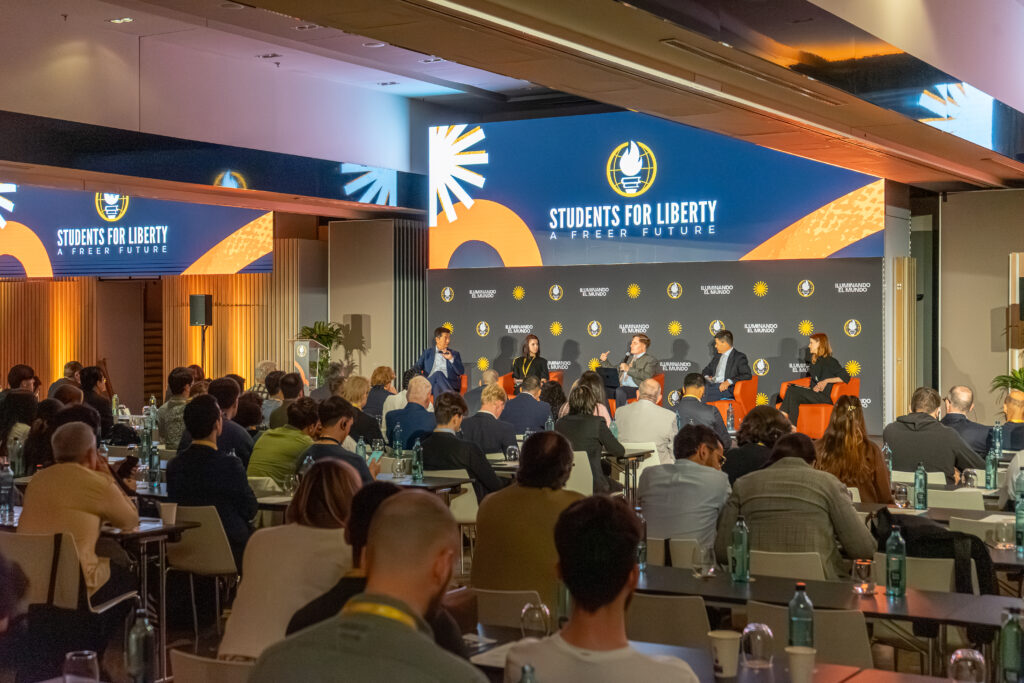
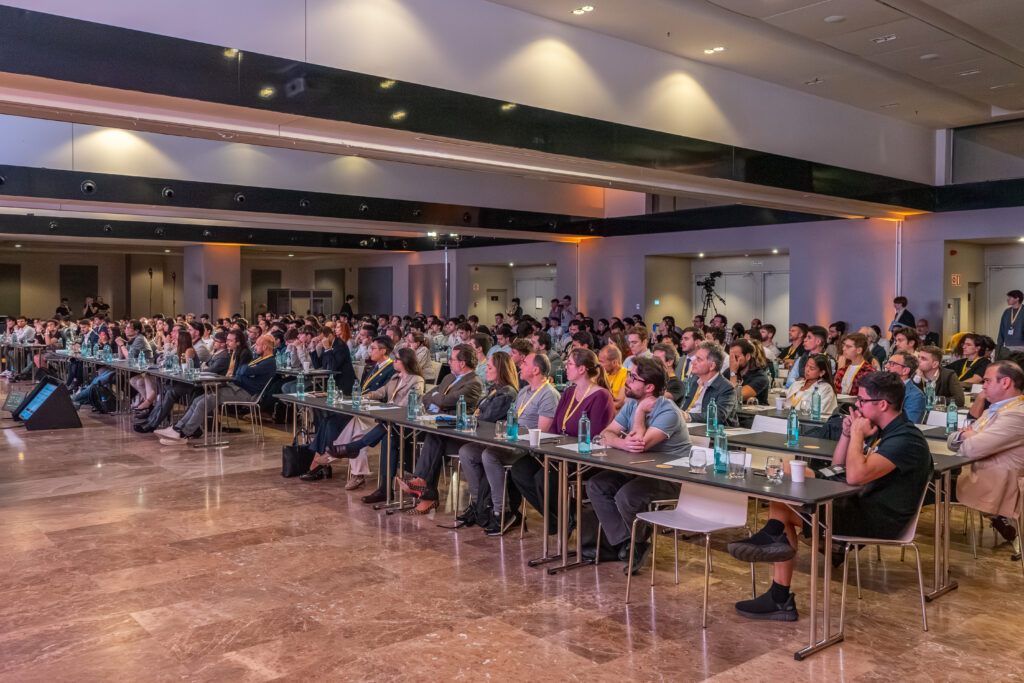
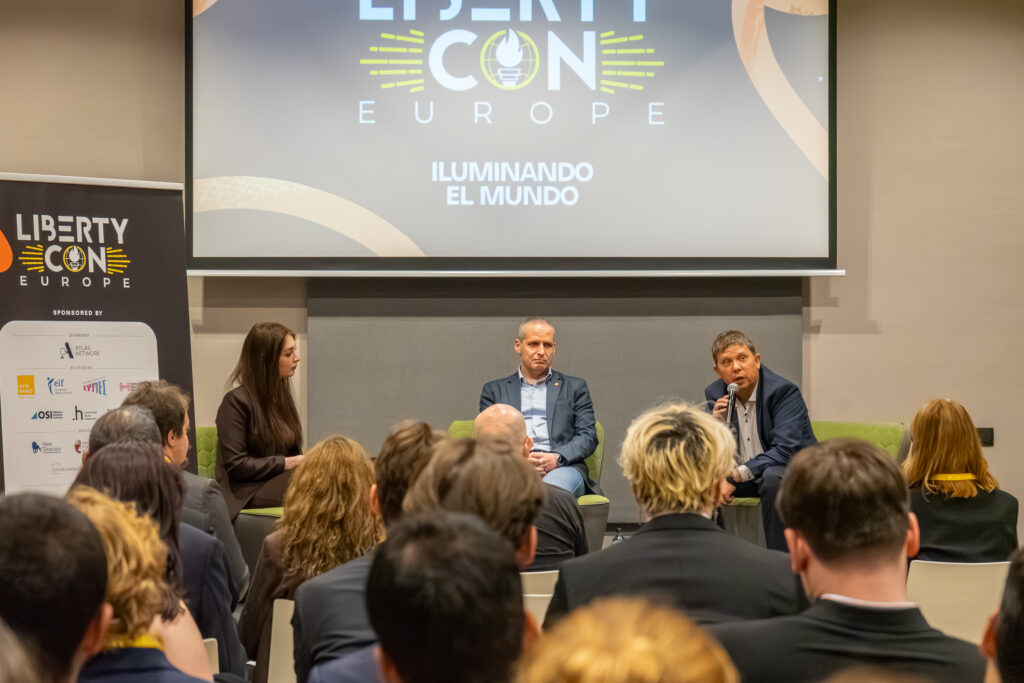
A major highlight of the event was the virtual address of Maria Oropeza, a Venezuelan activist and chief of campaign for María Corina Machado, just recently released from imprisonment for her work of promoting a democratic Venezuela, and a surprise in-person appearance of Zurab Japaridze, founder of the Georgian libertarian party, and a well recognisable figure of the Georgian opposition. Zurab himself was recently imprisoned for standing up to the Ivanishvili regime in Georgia, and received permission to leave the country just days before the event.
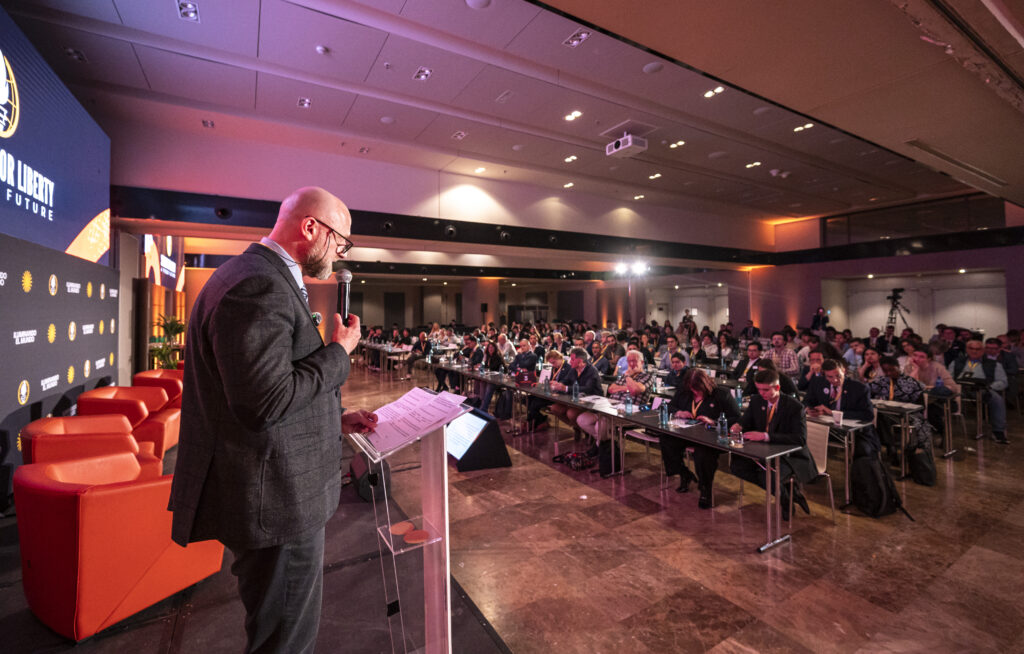
On Sunday, we continued sessions in three parallel rooms in a more relaxed atmosphere of the LibertyCon Community Day – from theory, we moved to practice: in a bloc of sessions under the umbrella of deregulate.eu, we discussed practical ways of easing Europe’s regulatory burden, be it general competitiveness, border restrictions, energy policy, free trade, or regulation of the online space.
We also heard from activists, influencers, and book authors with rich experience of going into the world and making a real impact.
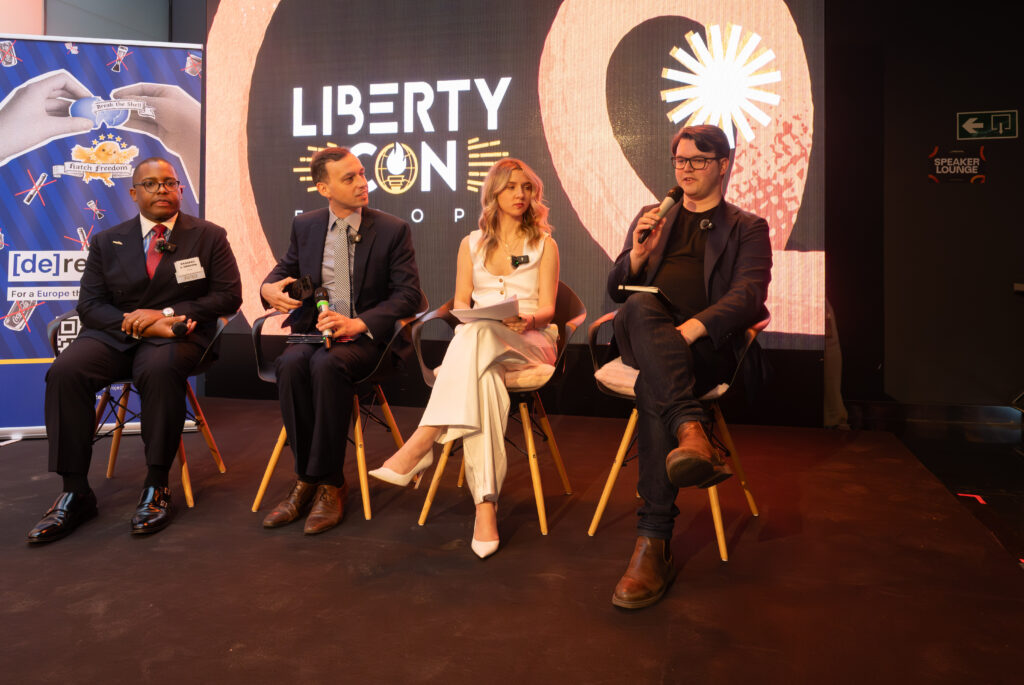
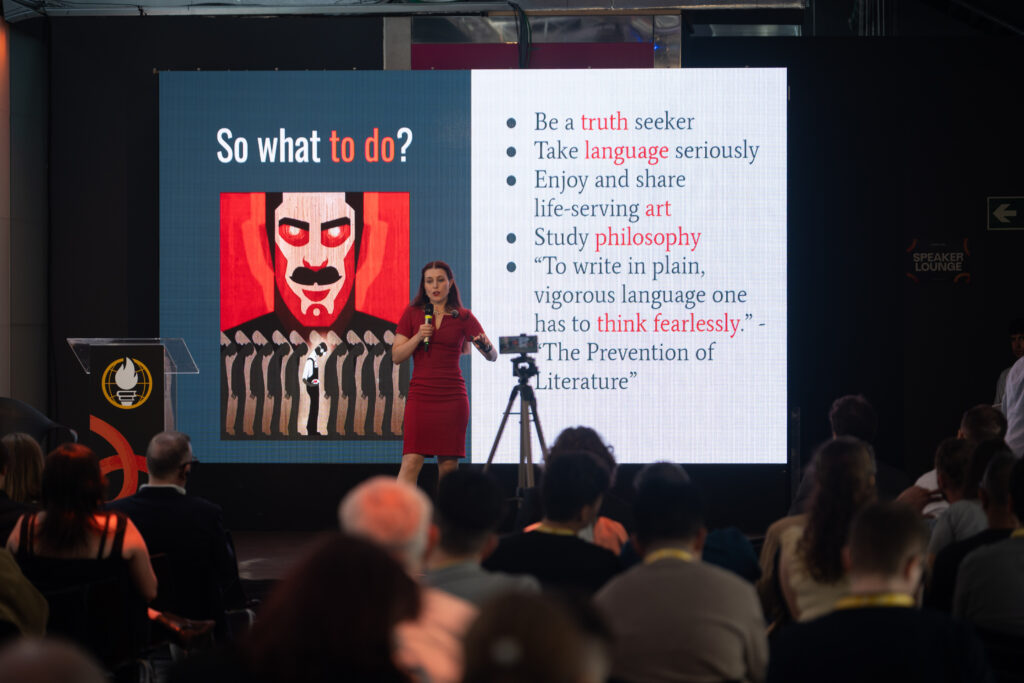
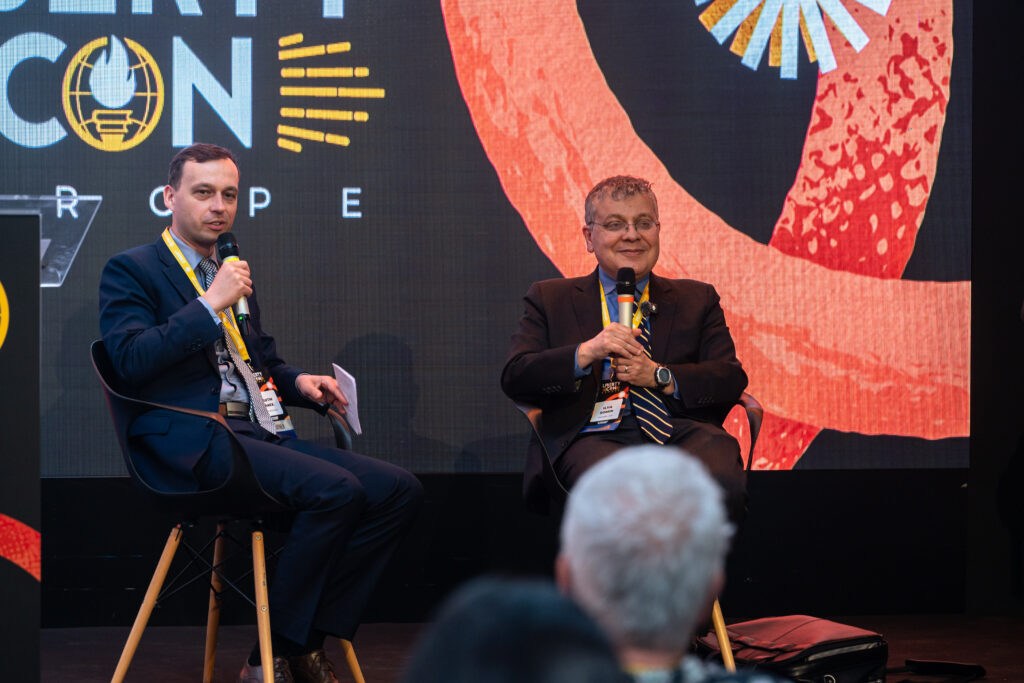
Throughout Sunday, we heard more from Ilya Somin, Bryan Caplan, Maria Blanco, James Tooley, Lobsang Sangay, David Friedman, Stephen Davies, and many others. As is now LibertyCon Europe tradition, Remy was the one to close the weekend with his talk and a musical comedy performance.
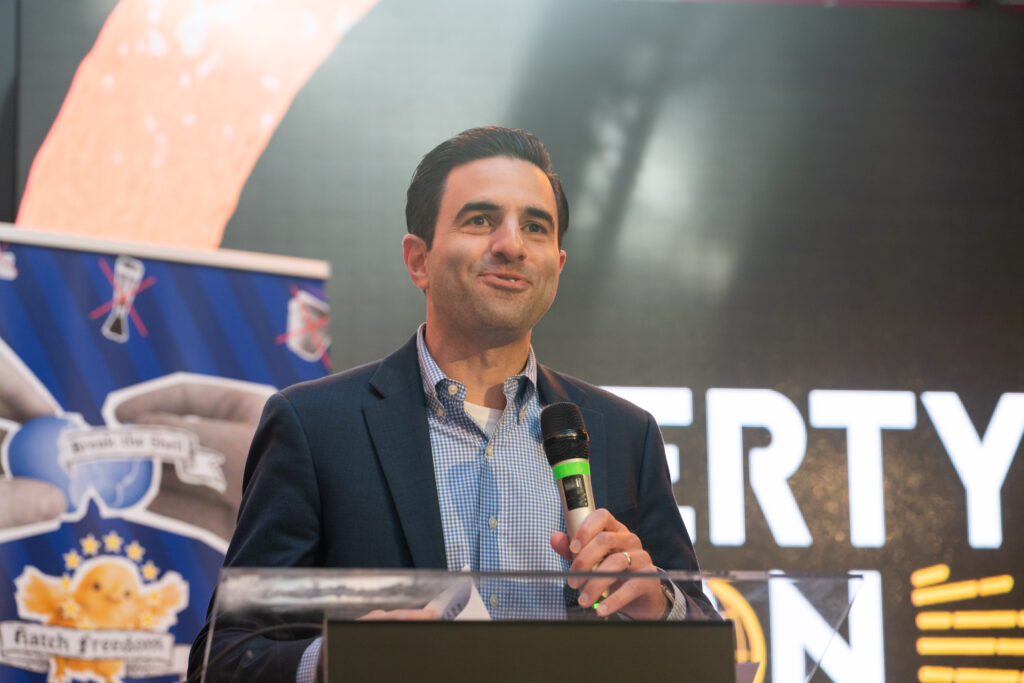
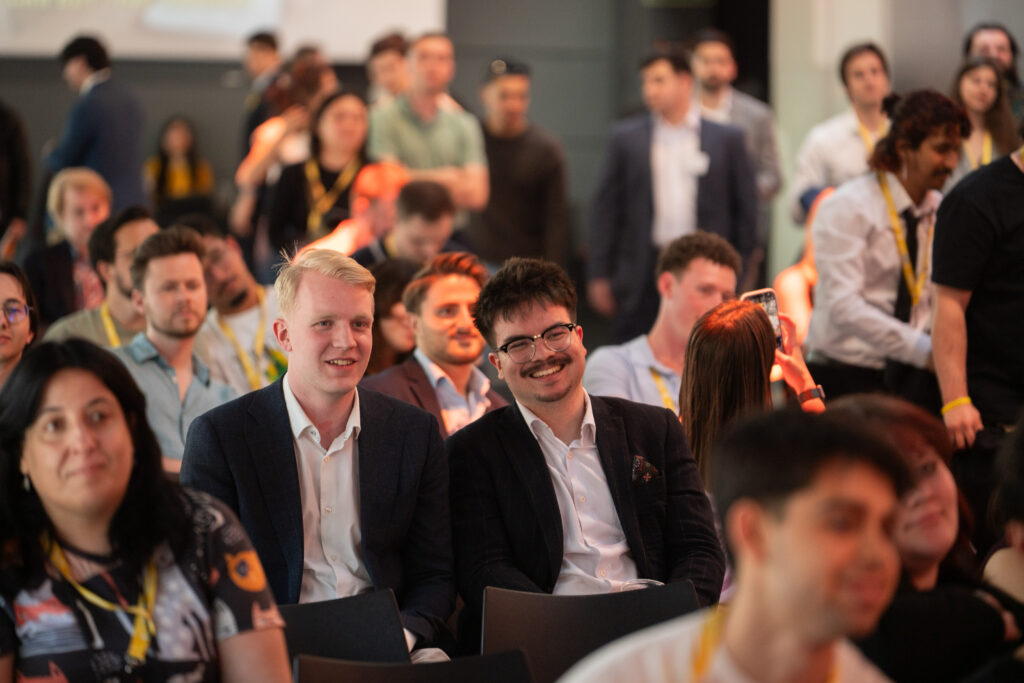
A memorable conclusion was the Sunday evening karaoke, for which we were joined not only by the attending students, but also by many of our speakers.
Showcasing impact and building a community
On the second and third day of the event, attendees could visit Liberty Fair – an exhibition of liberal organisations, universities and other partner institutions from Spain and abroad, make new connections, start new partnerships or discover interesting opportunities, or just stock up on some great libertarian stickers.
Among the materials attendees could get at the event was the traditional printed edition of our SpeakFreely magazine, with this year’s issue titled Freedom of Movement, covering expert articles and personal stories relating both to barriers and opportunities. For the first time ever, attendees could get a short printed version of SpeakLibre, SpeakFreely’s Spanish-language edition!
Some other side activities included a Sunday morning workshop on the topic of the re-emergence of conscription, or the finale of the European student debate competition, in which teams from Albania and Austria debated the issue of whether military interventionism can be a force for good, and in which the victory went to Ardit Minarolli and Martin Mborja from Albania.
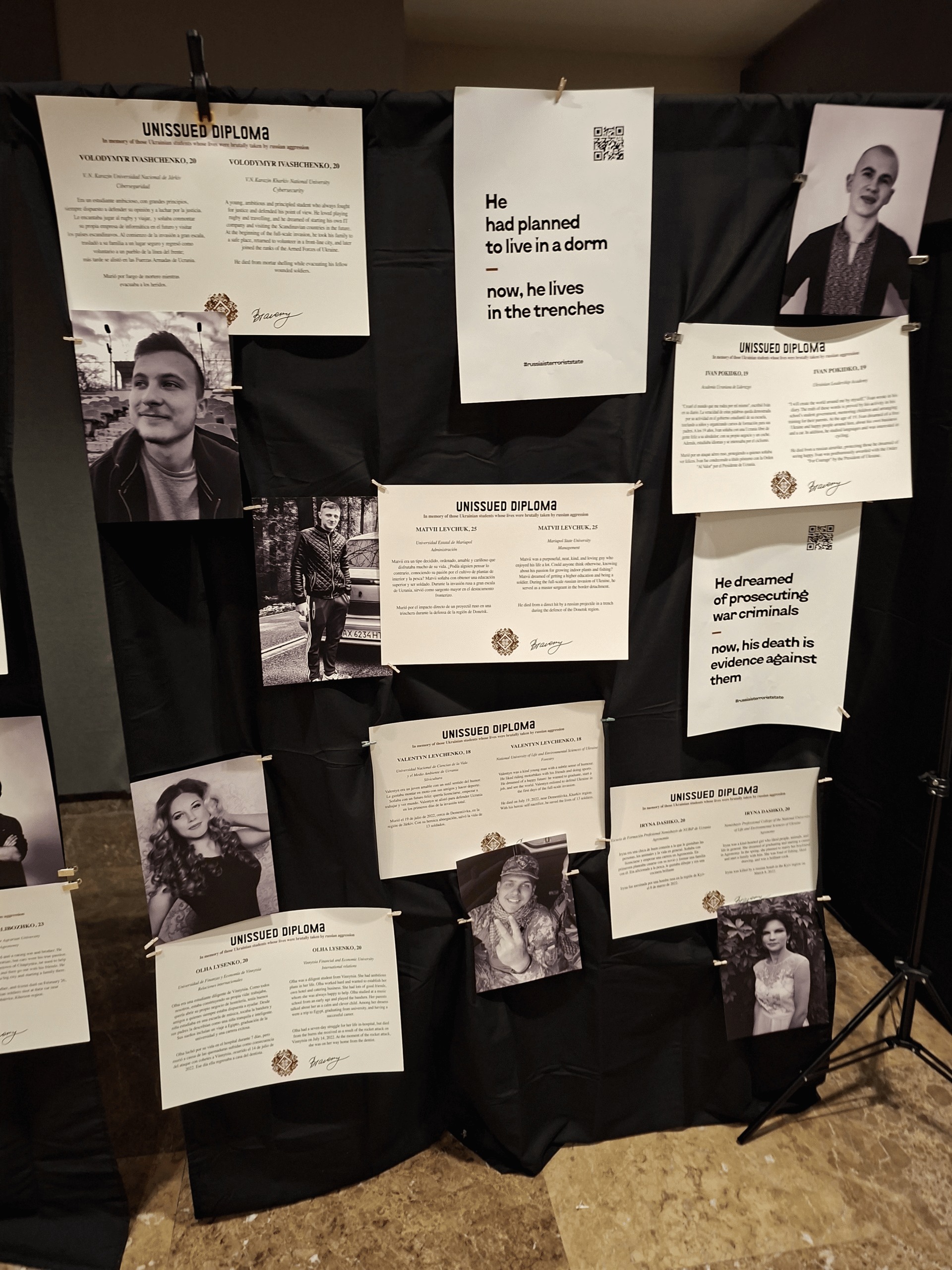
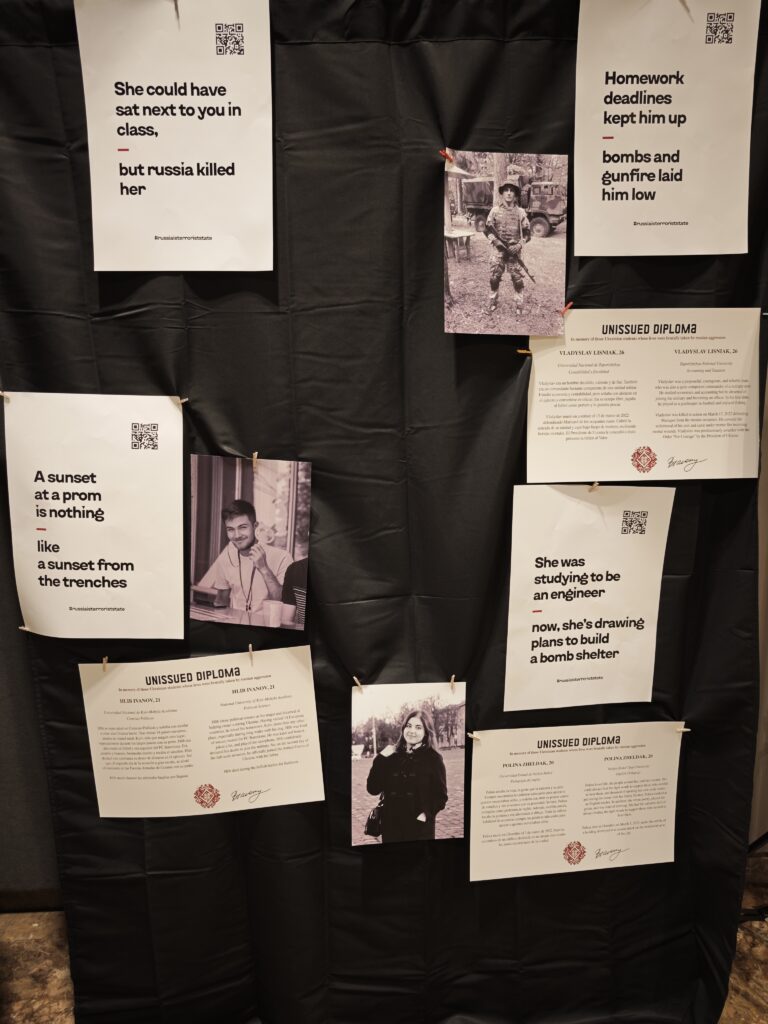
Throughout the event, we also remembered those who could not join us: both on Saturday and Sunday, attendees could visit the Unissued Diplomas exhibition, commemorating students who were killed in Russia’s murderous war of aggression against Ukraine, and their dreams that had remained unfulfilled.
Europe’s first Global Awards Ceremony
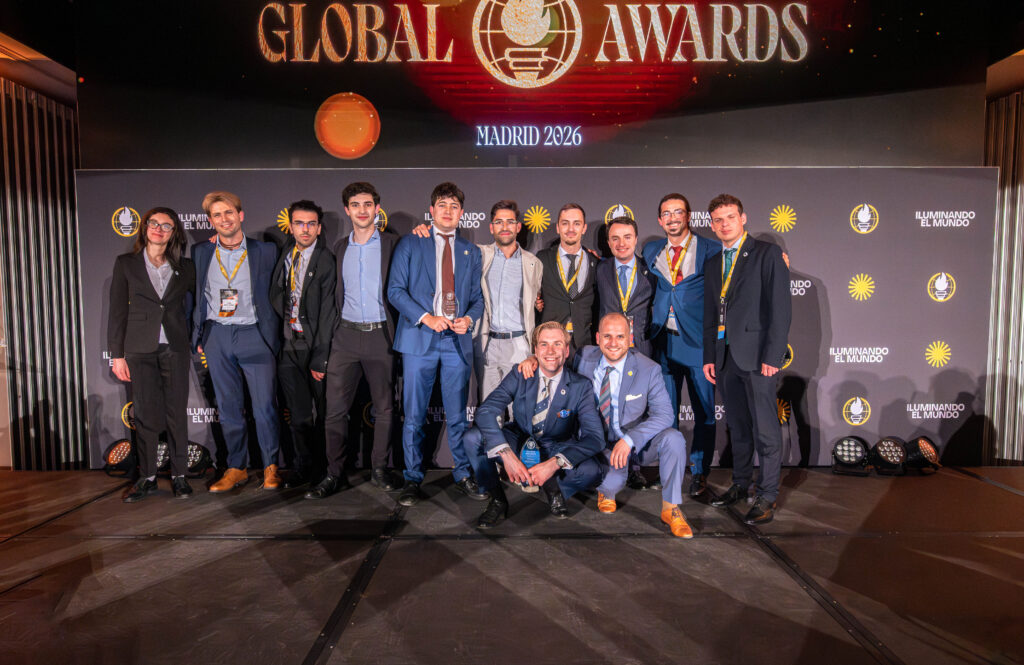
Last but not least, this year’s LibertyCon also hosted the first Global Awards Ceremony outside of the United States.
During the dinner, we celebrated the success of our most accomplished volunteers, heard more inspiring words from Lawrence Reed, Tom Palmer, Syed Kamall and Gabriel Calzada, and also remembered two champions of liberty who are no longer with us: Dan Grossman and Aldina Jahic.
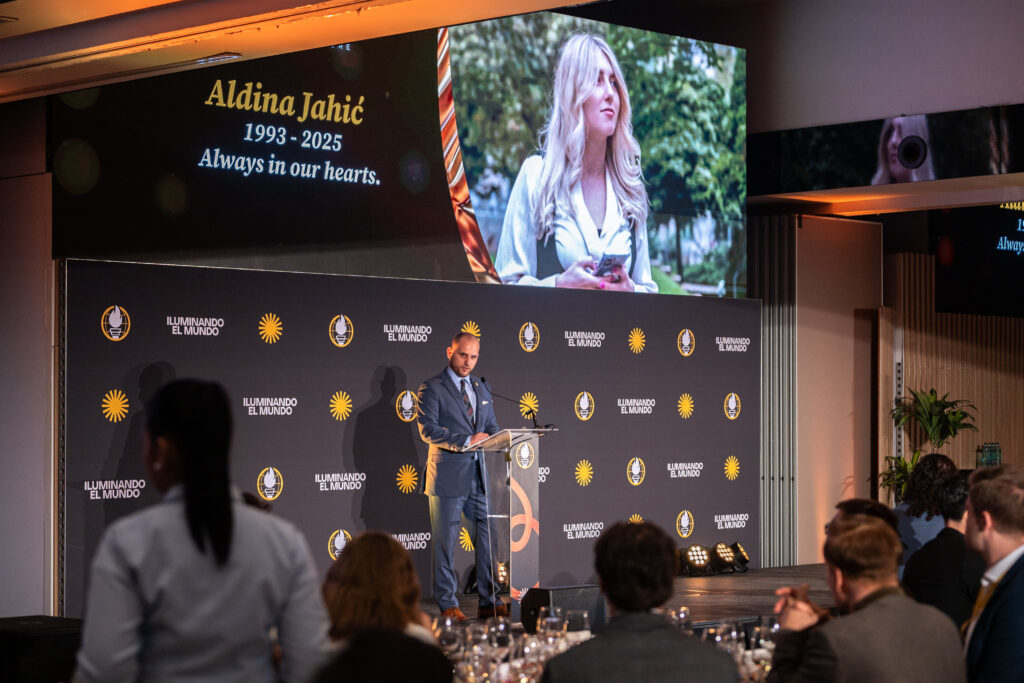
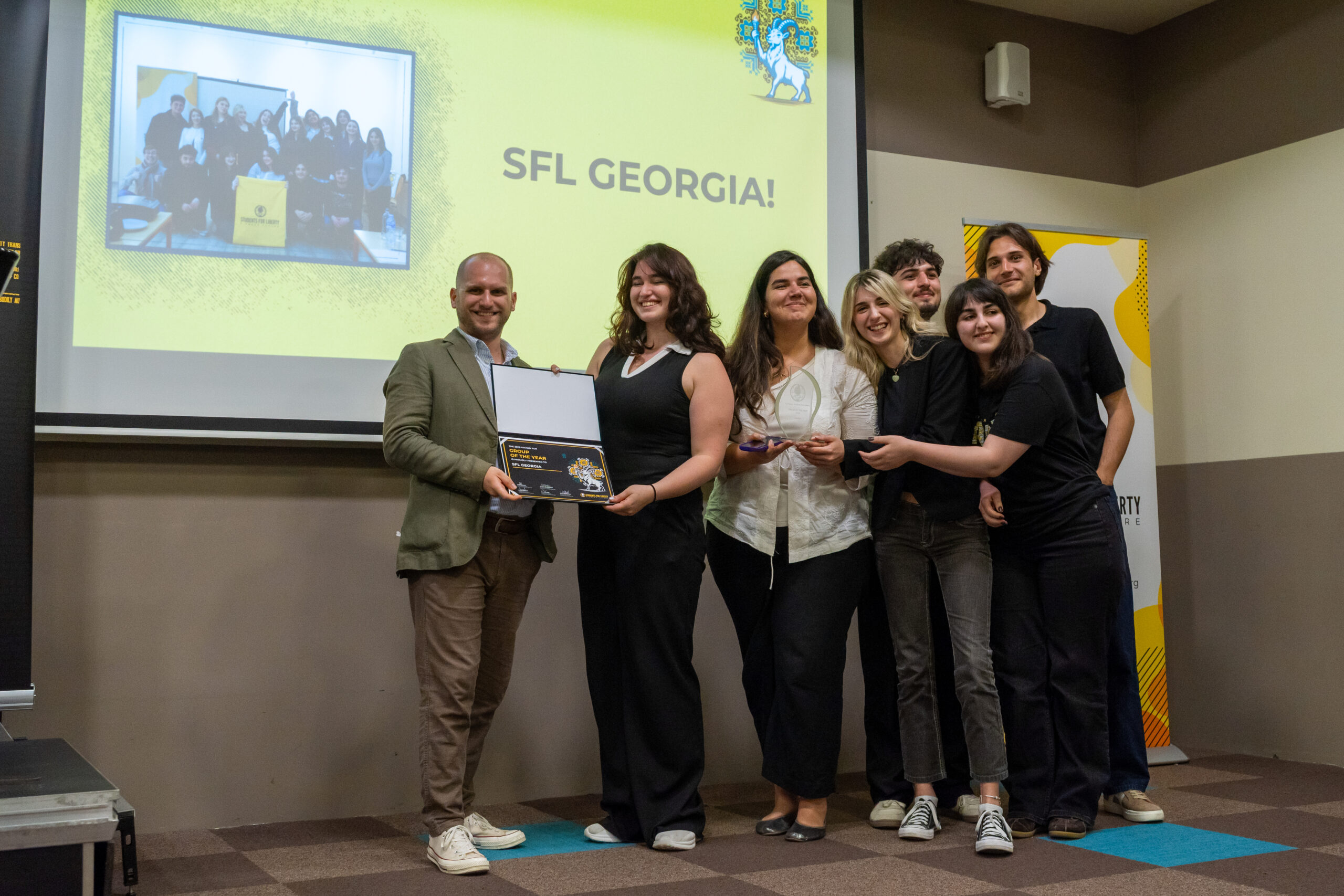
For the awards themselves, students were nominated for their work in three categories: student group, leader, and the most impactful project of the year from all eight of Students For Liberty’s global regions, and three finalists from every category joined in person in Madrid for this very special evening.
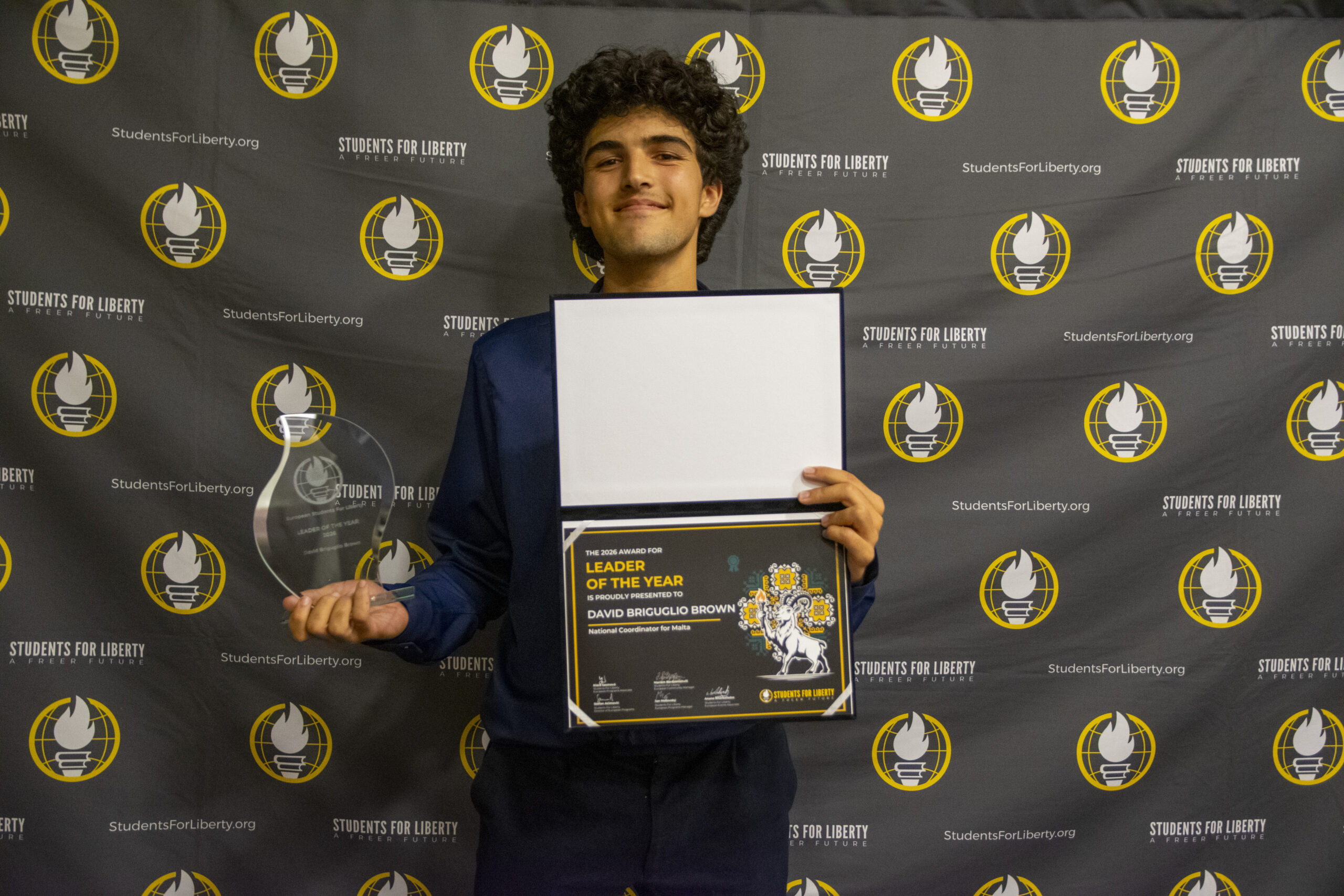
Europe had contenders in the final run in all three categories: team Spain for the group of the year, Blazej Szkudlarek from Poland for the leader of the year, and our Chat Control campaign for the project of the year, and in the end, team Spain and Blazej were awarded the global awards.
Further motivated by these wins, we already can’t wait to see what campaigns and projects our Spanish and Polish chapters get up to next.
The inaugural David Boaz Impact Project of the Year Award
This year’s ceremony was special for one more reason: for the first time, we presented the David Boaz Impact Project of the Year Award, named after the late Cato Institute scholar and one of our founding advisory board members, whose support helped SFL become what it is today. The award, made possible by David and his husband, Steve Miller, will each year recognize the student-led Impact Project that creates the most meaningful and measurable change toward a freer world.
And choosing was not easy: this year alone, SFL’s students ran 179 Impact Projects across 36 countries, out of which three finalists joined us in Madrid.
- Bator Vari, the 19-year-old Hungarian behind the Stop Chat Control campaign, organized volunteers in over 20 countries who contacted 450 Members of the European Parliament before the proposal was rejected.
- Prasidika Dhungana, our only nominee from Nepal, brought policymakers and student leaders together for principled debates through her Nepal Policy Forums, and kept going even as protests shook her country.
- And Asher Boekestein grew The Radical Centrist, a content platform that gathered more than 300,000 views and brought hundreds of new applications to SFL.
In the end, the award went to Asher, who, in the true spirit of David Boaz, sees it as just the beginning: “There’s still so much that we can fight for, so much progress that we can make. And there’s so many more people who we can reach.“
You can follow the journey of all three finalists, from their arrival in Madrid to the moment of the announcement, in the video below.
LibertyCon Europe will be back in April 2027, so stay tuned for the announcement of the dates and the hosting country!