By Inés Nishimwe
What is “freedom” to a girl who has to choose between going to school and managing her period?
That question haunted me.
And what can I do to address this problem if the government won’t?
That question INSPIRED me.
In Burundi, girls still struggle to access affordable menstrual products, clean water, and reliable information. So for them, a period can mean missed classes — and embarrassment. I know, because I was one of those girls.
More than three in 10 Burundian schoolgirls, lacking sanitary products and facing social stigma, miss class every month when they have their periods. The UN documented it in 2021. It’s known as “period poverty.”
The government here has not acted, and indeed does not seem to care.
Of course, this isn’t the case just in Burundi. In many places in the world, menstruation can limit a girl’s education, health, dignity, and choices. But as a medical student and Students For Liberty volunteer, I kept asking myself: Why should we accept that as a fact? Why should something so natural be so limiting?
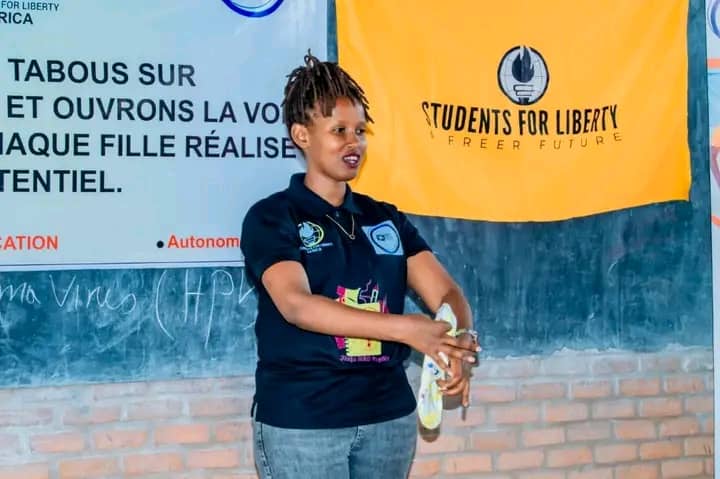
The last thing I wanted to do was to create yet another campaign where young people get lectured to, only for the lecturers to leave. Instead, I wanted girls to learn how to speak for themselves, so they could someday teach others. And that is how Iteka Red Rights began, in partnership with Burundian Unity for Development Association (BUDA).
The name came to us pretty naturally: “Iteka” means dignity; “red” signifies breeding and menstruation; and of course we believe every woman has the RIGHT to live their menstruations with dignity.
And so, I approached SFL with the idea for Iteka Red Rights not as a charity, but as a movement. A youth-led movement. The goal was straightforward, but difficult: to break the taboo, produce low-cost reusable pads, and run an awareness campaign.
I was lucky enough to have been mentored by a Brazilian SFL alumna, Deborah Bizzaria, who’s now at MIT’s Poverty Action Lab.
She was instrumental in helping me get this project up and running: We had online discussions about it, and she oriented me about practical, on-the-ground activities (as opposed to what works only in theory). She showed me how to include teachers and parents in our trainings, and she encouraged me to partner with other organisations that could help.
Before meeting her, I honestly wasn’t sure that the project would be sustainable. But she taught me to believe in myself and to develop a laserlike focus on my vision: Students freely discussing menstruation and how to prevent the severe diseases related to menstrual troubles and a lack of hygiene.
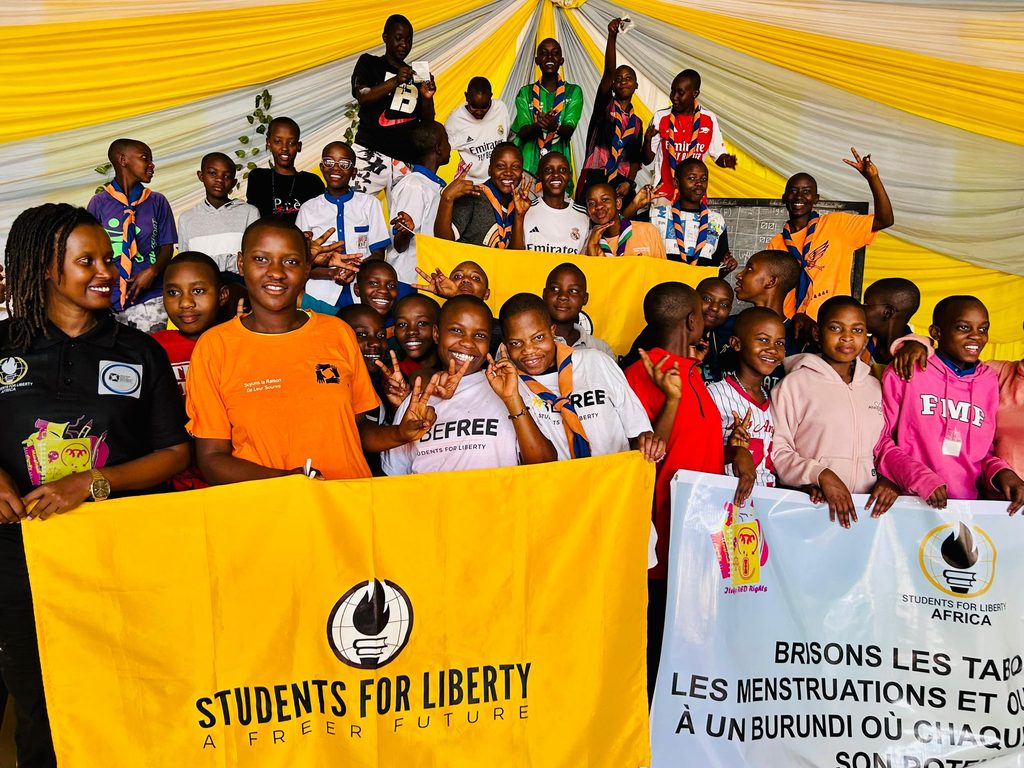
I started by going to schools to create safe spaces where girls (and boys; they’re part of this conversation, too) could talk openly about menstrual and reproductive health without shame.
Today, the two active clubs are at Lycée Sewiwa in Gitega, the capital city, and Lycée Communal Gihinga in Mwaro, a province to the west of the capital, where student leaders and teachers keep these important conversations alive. For me, that is already a form of change: In those places, questions about menstruation no longer have to be whispered.
But I know that conversation alone is not enough.
We are exploring collaborations, including with CouldYou? Cups, to make menstrual cups available through our activities. Our partner, BUDA, has already supported the initiative by providing 100 menstrual cups.
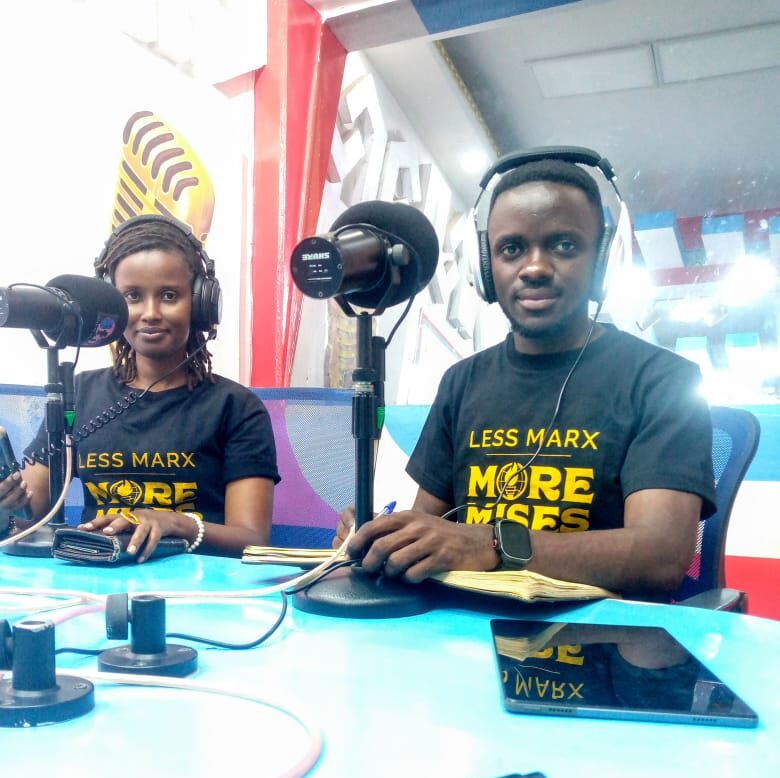
And because I learned quickly that not everyone in Burundi is on social media, we took the conversation to the radio. We have already run two radio awareness campaigns, reaching communities, especially in rural areas where radio remains an important source of information.
None of this is easy, but I will keep going because of what SFL has shown me: that freedom begins very simply, sometimes as simply as being able to ask questions without shame.
Inès Nishimwe is a Burundian medical student and aspiring doctor passionate about public health, social inclusion, youth empowerment, women’s rights, and equitable healthcare. In 2023, she joined Students For Liberty, and said, “Being a volunteer for Students For Liberty gave me the space to express myself and to bring my vision and passion to reality.” In 2024, she completed the Dynamic Doctors Uganda Externship. She currently leads Iteka Red Rights and is learning German at a B2 level.