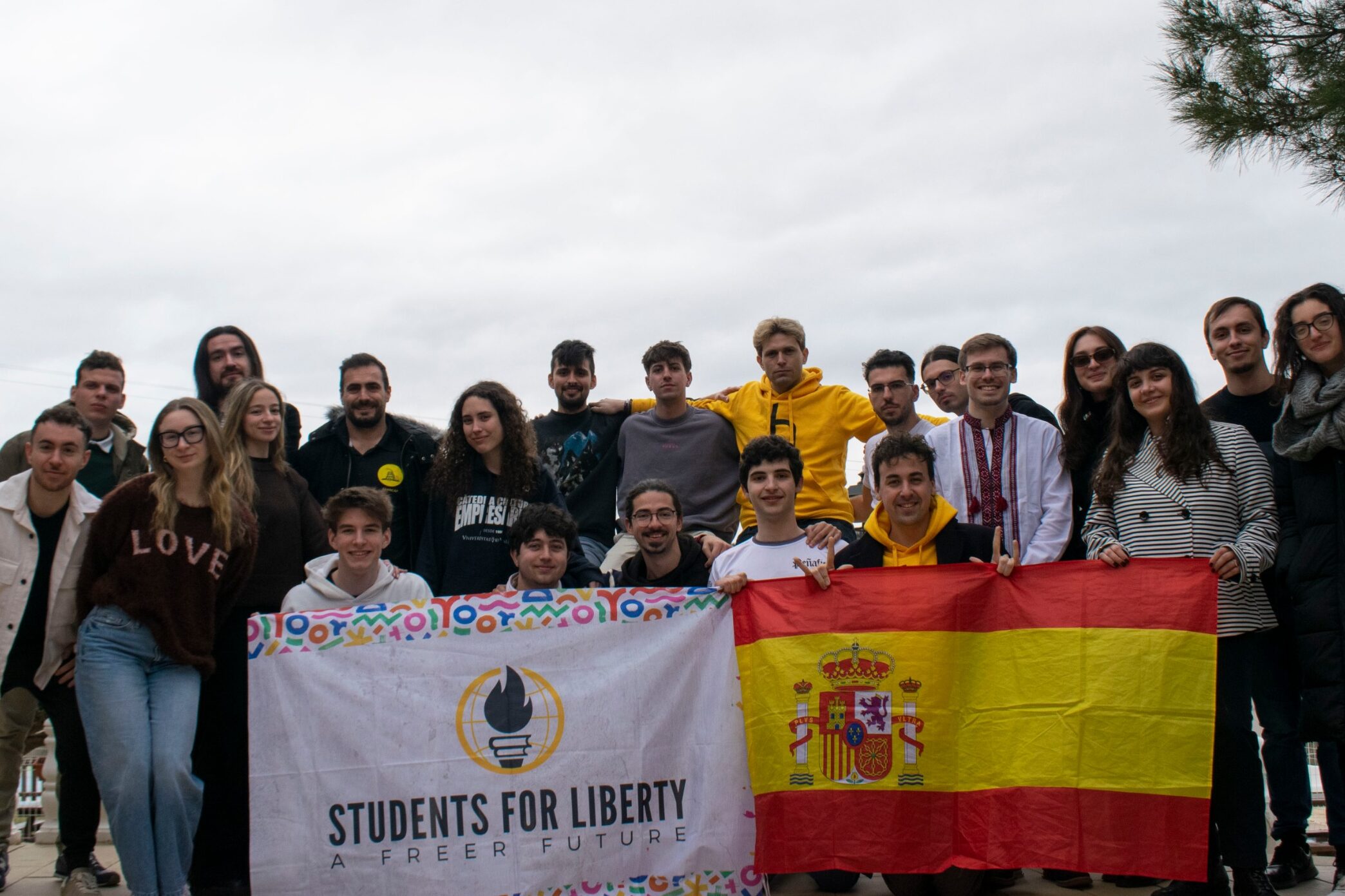
Over the weekend of February 6-8, 2026, Students For Liberty Spain hosted its regional training in Socovos, in the southeast of Spain. (Not far from Valencia, where last year, our volunteers helped victims of a terrible flood.)
Liberty leaders from across the country came together to align on strategy, share local successes, and prepare for the upcoming LibertyCon in Madrid (more details here). The weekend featured beginner and advanced trainings to make sure both senior and newcomer volunteers were welcome.
Spain is one of the most decentralized SFL teams in Europe, so the training continually hit on the themes of collaboration and the exchange of ideas. Short reports were presented by local teams, showcasing a range of initiatives designed to make classical liberal ideas more accessible in their respective regions.
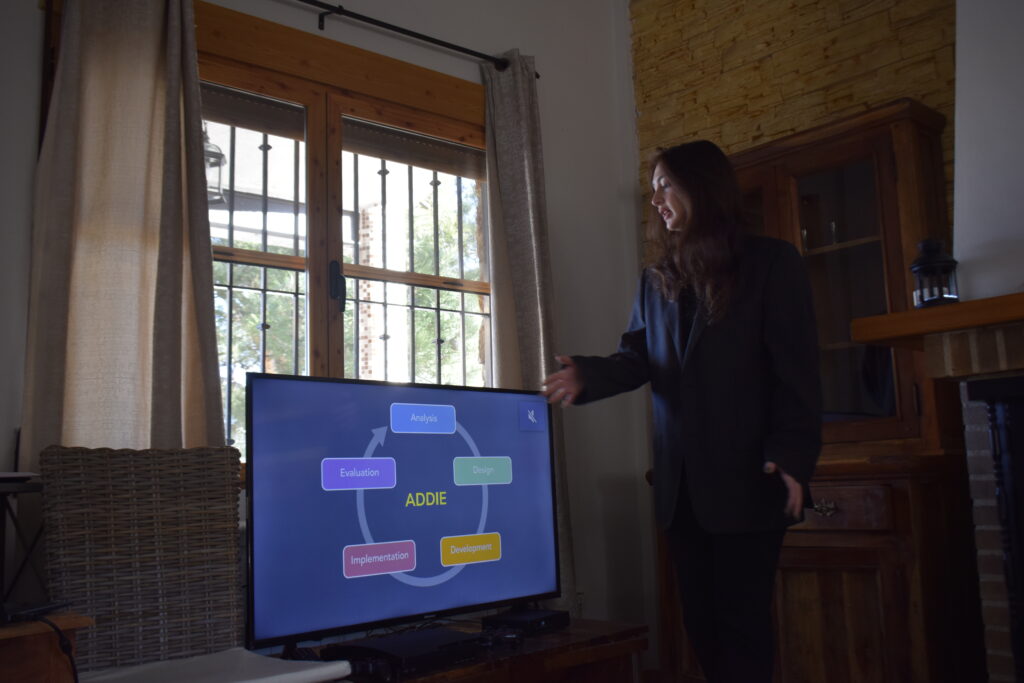
For example, the Canary Islands team piloted seminars with 8th-grade students. By making complex economic ideas palatable through gamification, they are engaging people at a younger age than ever. Additionally, SFL Spain conducted trainings about project management, social media, education, and advocacy.
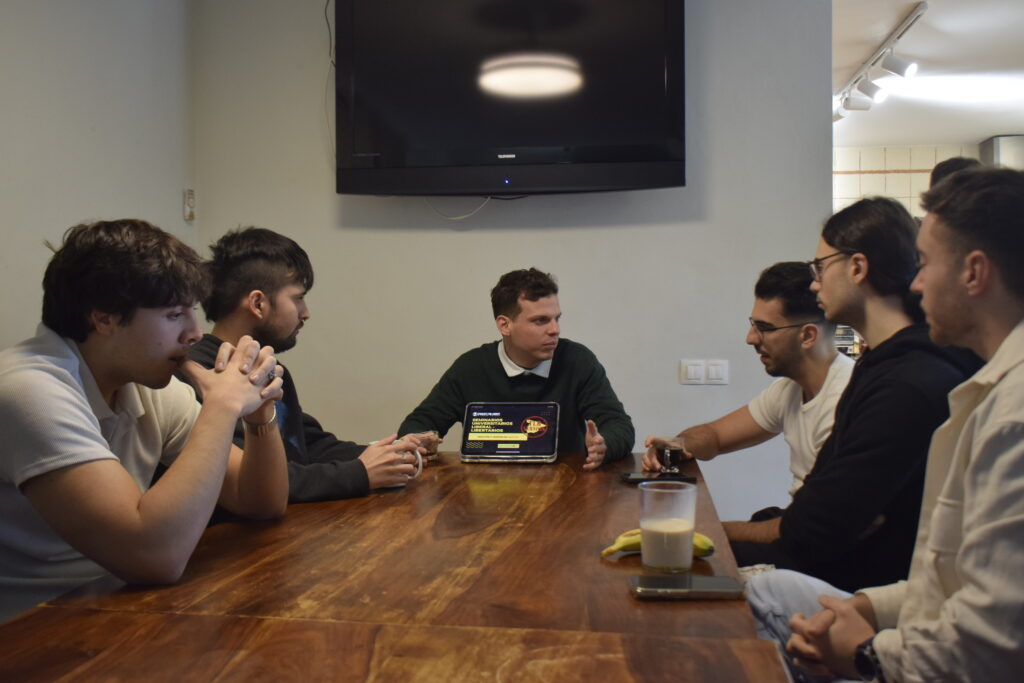
A big part of the weekend was dedicated to outreach workshops for possible LibertyCon partners, speakers and influencers. That focus gave student volunteers the chance to be involved in the marketing and promotional activities for Students For Liberty’s biggest event of the year.
The training session concluded with a debate competition, where leaders from across Spain discussed minarchism vs. anarchism, free borders vs. managed borders, and other hot topics in the world of liberty. This type of openness and willingness to partake in an open dialogue is exactly the spirit we will engender at LibertyCon and beyond.
Register here for LibertyCon in Madrid, April 24-26.
Standing up for the ideas you strongly believe in and challenging the status quo sometimes requires stepping out of your comfort zone and getting exposed to all kinds of ill-intentioned responses, which is why it is especially commendable when one of our students decides to do it so publicly.
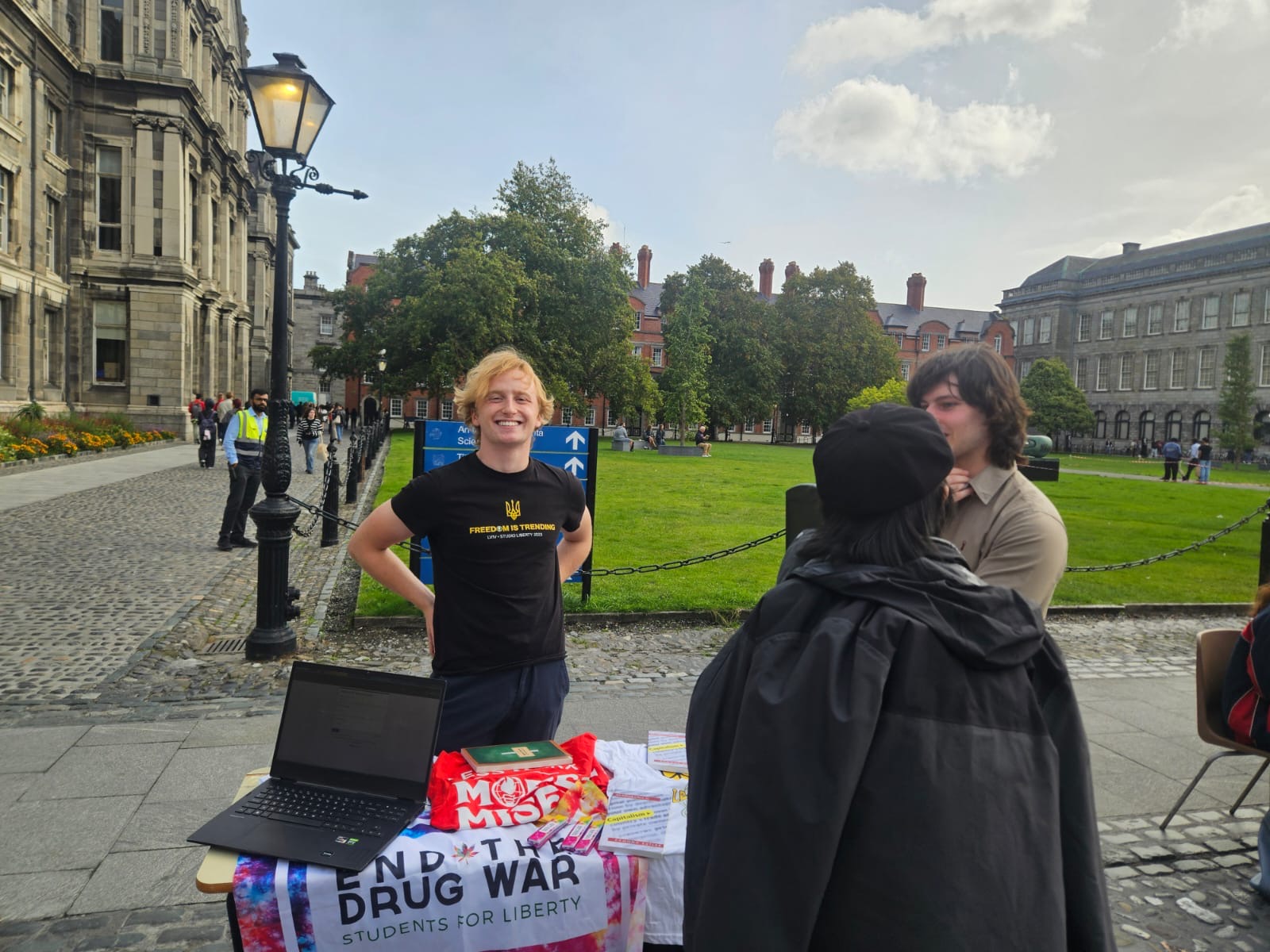
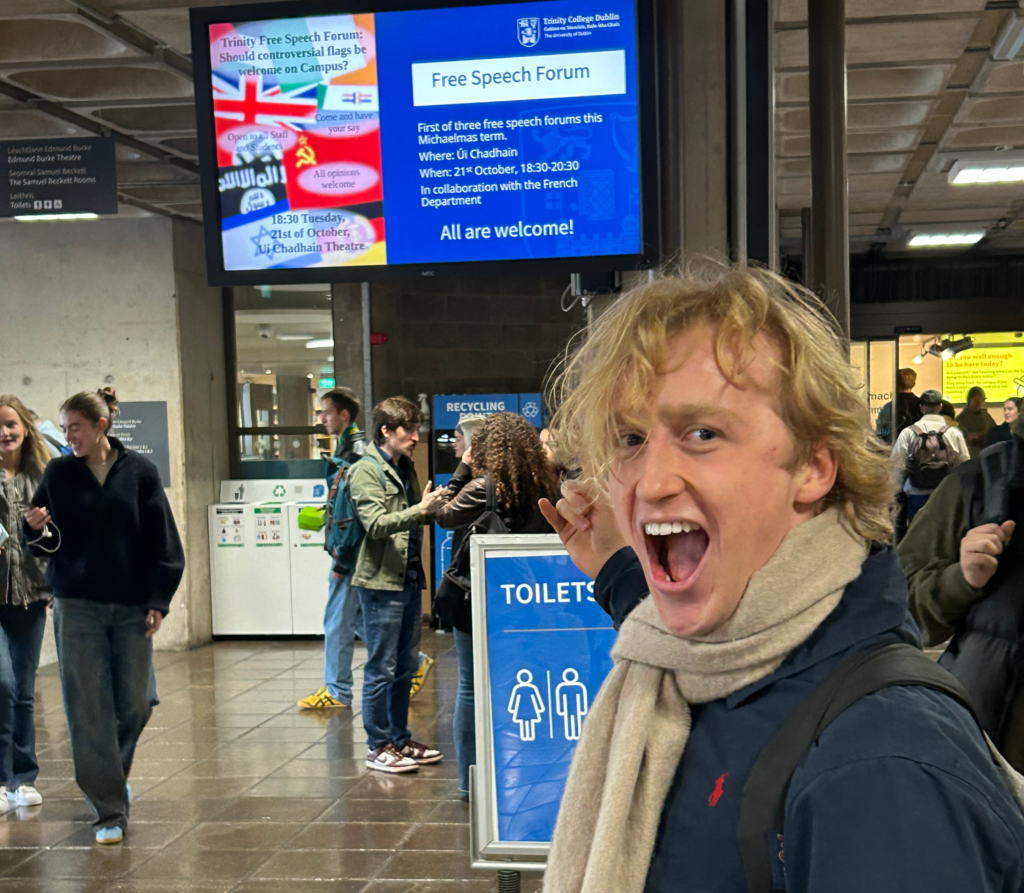
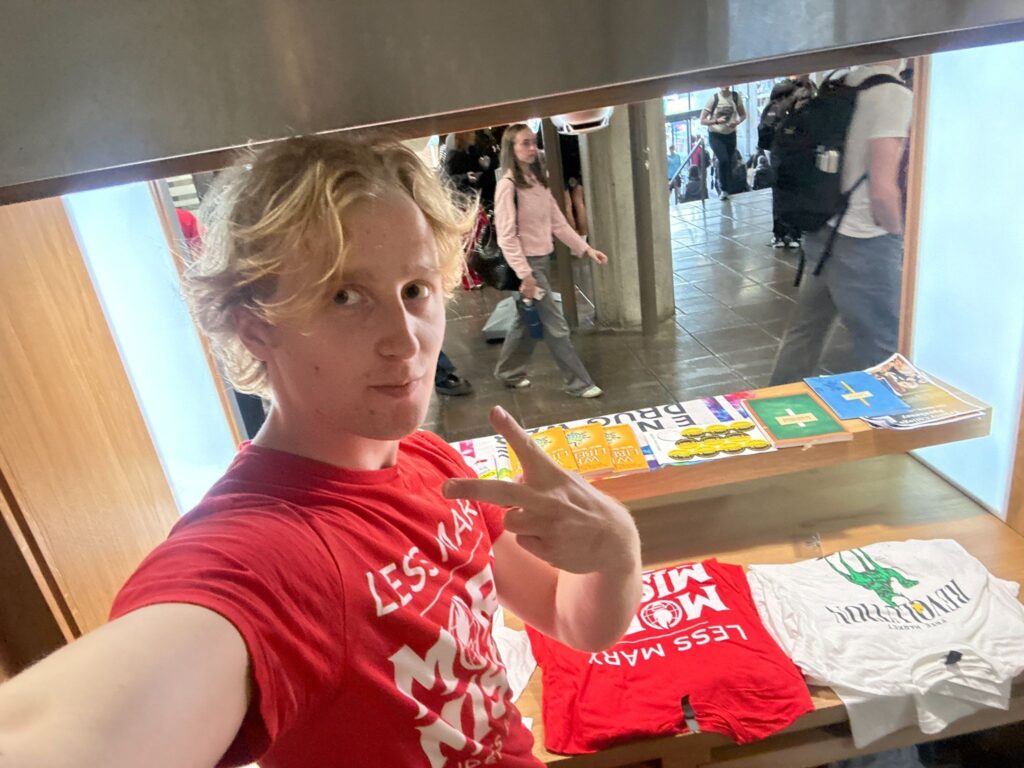
Jacob Barron, a Students For Liberty volunteer in Ireland, experienced all of this first hand. Being the founding member of our new Dublin chapter, he started off by organising tablings around campus during which he discussed various topics with those who stopped over, drawing a lot of attention from the students across the political compass.
Building up on the engagement from the tablings, Jacob decided to create more public fora for open conversations about difficult topics, hosting first a “free speech speak easy” event, and later on a free speech forum around the topic of controversial flags in public spaces, inspired by the hammer and sickle symbols seen around campus and on the Fresher’s Fair.
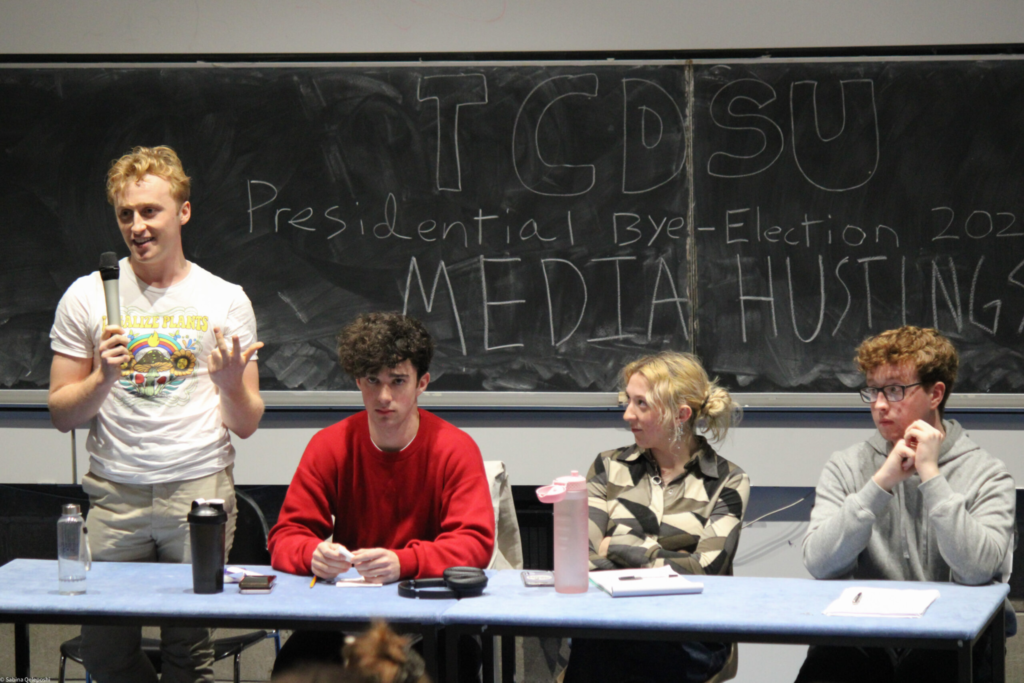
However, when Jacob decided to run for a Student Union president on his college campus, he was met with a targeted smear campaign, calling him an “extremist” for his strong support of free speech.
For three years, Jacob watched from the sidelines as his Student Union drifted away from representing students and toward complete lack of accountability, “padding CVs” and chasing national headlines. And after the Student Union president resigned suddenly, Jacob decided to address all of these issues by running with one week left. In his manifesto, he advocated for increased focus of the Union to seek out opportunities for students, and promoting a “live and let live” approach to life on campus.
As Jacob had previously participated in our campaign against the proposal of the EU’s Chat Control regulation, which seriously threatened Europeans’ privacy on social media and messaging platforms, he received harassment on social media from the opponents of his candidacy, facing the allegations of “supporting child abuse” for simply advocating for a better solution for combating online abuse that would not impose mass surveillance across the EU.
When Jacob was called “an extremist” for his strong support of free speech and defense of privacy, the Student Union didn’t stand up for him. Instead of defending a student that wanted to engage in civil discourse, they remained silent, suggesting that the Union only protects the students that agree with them.
The biggest misconception about classical liberals is that when you are not left-leaning, you are automatically anti-immigration, anti-LGBTQ rights and anti-Palestine. You get associated with the right wing circles whose values are in direct contradiction to everything you stand for. During the interviews he gave during the campaign, Jacob surprised the crowd by criticising the big government, supporting gay and immigrants rights, and being committed to individual liberty.
“[My interviews] seemed to aggravate a lot of people, who didn’t think I was serious, or felt that they should say such awful things about me online that they would never say to my face” – mentioned Jacob.
Jacob didn’t have a massive clique support going into the elections, however, he managed to resonate with the majority of the “dissociated” bystanders like he had been himself a couple months prior. He managed to get ahead of some of the Student Union members in the elections, and, even though he didn’t win, he redefined the conversation about classical liberalism on his campus.
Nowadays, when people hear your opinion on one certain issue, they jump to the conclusions and assume your whole identity without asking further questions. This reflexive labeling is exactly why campus discourse has stalled, and why Jacob’s run was so necessary. By placing third against career insiders in just seven days, he proved that a “silent majority” exists for those willing to stop complaining and start changing the things around them.
“People always tell me that ‘you know, if you don’t like all of this left-wing socialist stuff, do something about it and stop complaining’. So I did …” sums up Jacob.
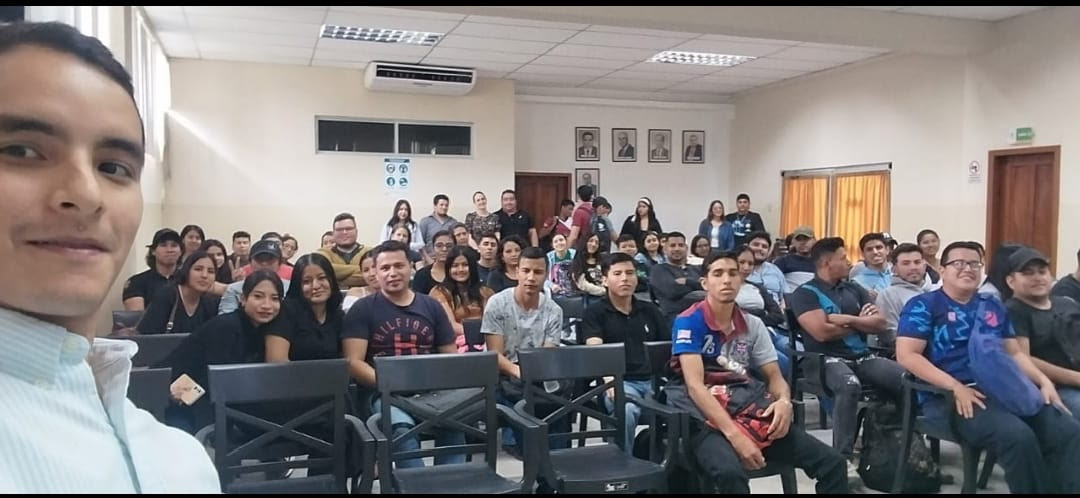
In Colombia, Students For Liberty members led a four-part educational series examining one of the defining moments of the 20th century: the fall of the Berlin Wall.
More than a symbolic event, the collapse of the Wall marked the unraveling of a political and economic system built on coercion, division, and restricted human exchange. For the Colombia team, revisiting this history was not about nostalgia—it was about clarity.
Across four two-hour sessions, 50 participants engaged in a structured exploration of the Wall’s origins, its evolution, and its economic and political consequences. The discussions situated the Wall within the broader context of World War II and the Cold War, examining how competing systems of governance shaped millions of lives.
The program was led by Larzon Steve Cárdenas Delgadillo, María José Antonella Lombardi Llanos, Andrés Santiago Narváez Caicedo, Ana María Güiza Jiménez, and Cristian Javier Romero. Together, they guided participants through a critical analysis that connected historical events to contemporary debates about state power, economic models, and individual freedom.
Over eight hours of programming, the series consistently returned to a central question: How do political and economic structures shape human flourishing?
Participants were encouraged not only to understand the past, but to draw lessons from it—recognizing the human cost of systems that limit liberty and the importance of institutional safeguards that protect it.
By grounding today’s debates in historical memory, SFL Colombia reinforced a vital truth: defending freedom requires understanding the consequences of its absence. Education, when done seriously and thoughtfully, becomes more than an academic exercise—it becomes preparation for principled leadership.
From classrooms in Colombia to initiatives across continents, SFLers are doing more than hosting events. They are strengthening credibility, cultivating informed dialogue, and preparing the next generation to engage with the ideas of liberty with depth and conviction.
From countries which have a Constitutional foundation of freedom to protect, to those in which our students and alumni are risking it all for liberty, we want to tell you how our students and alumni are making a difference.