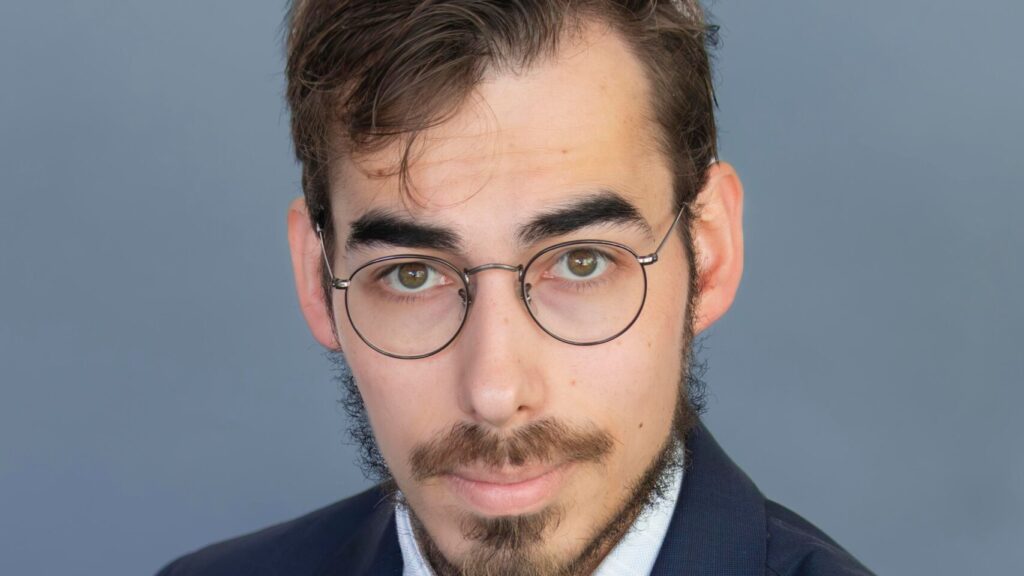
By Cruz Marquis
My life changed when I met my favorite living economist at SFL’s LibertyCon International in 2025.
He was signing books. I had just been admitted to George Mason’s Economics Ph.D. program.
I had applied there to study the economics of war and peace, and to write my dissertation under the direction of Dr. Christopher Coyne; his reputation as one of the leading figures applying Austrian methodology to questions about human conflict preceded him.
Speaking of human conflict, see my Learn Liberty Q&A: Can Nuclear Weapons Ever Be Abolished?
Then I actually met him, the man behind the work. Said hello; shook his hand. Most people are probably nervous to meet their heroes, but I pride myself on staying calm in these kinds of conversations. I even remember which books of his we discussed: After War and How to Run Wars.
In short, we connected over ideas and shared interests, and six months later, I was doing more than just sitting in his lectures. I had become his research assistant and was writing a paper with him.
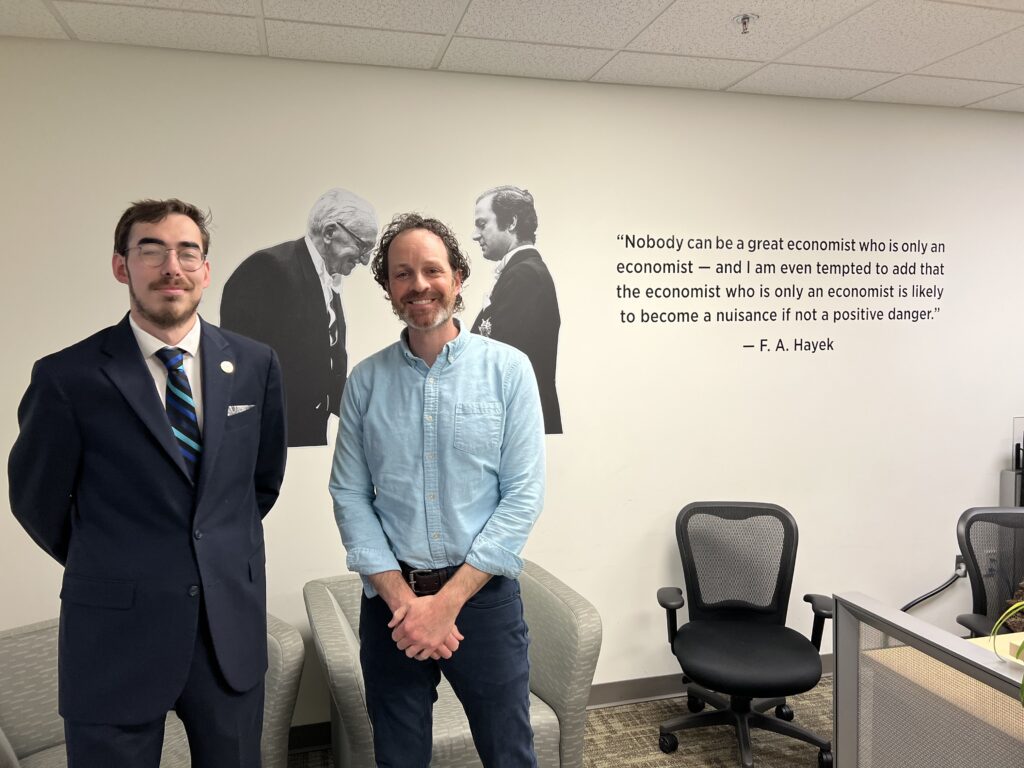
As Associate Director for the Mercatus Center’s F. A. Hayek Program, Dr. Coyne is a major presence in the life of a first year student, so to say that I learned much from him is an understatement.
Every Tuesday for three hours, he constructed a microeconomics curriculum with readings that drew on thinkers like F. A. Hayek, James Buchanan, Harold Demsetz, Ronald Coase, Carl Menger, Armin Alchian, and exactly seventeen others.
It still ranks as one of the best classes I have ever taken (The competition is quite stiff at GMU, with the likes of Dr. Peter Boettke and Dr. Bryan Caplan also on faculty). I was so enthralled that after every class, I wound up walking with Dr. Coyne back to his car to continue discussing the finer points of economics.
But I didn’t just learn economics; I became an economist. A presenting economist. A professionally published economist.
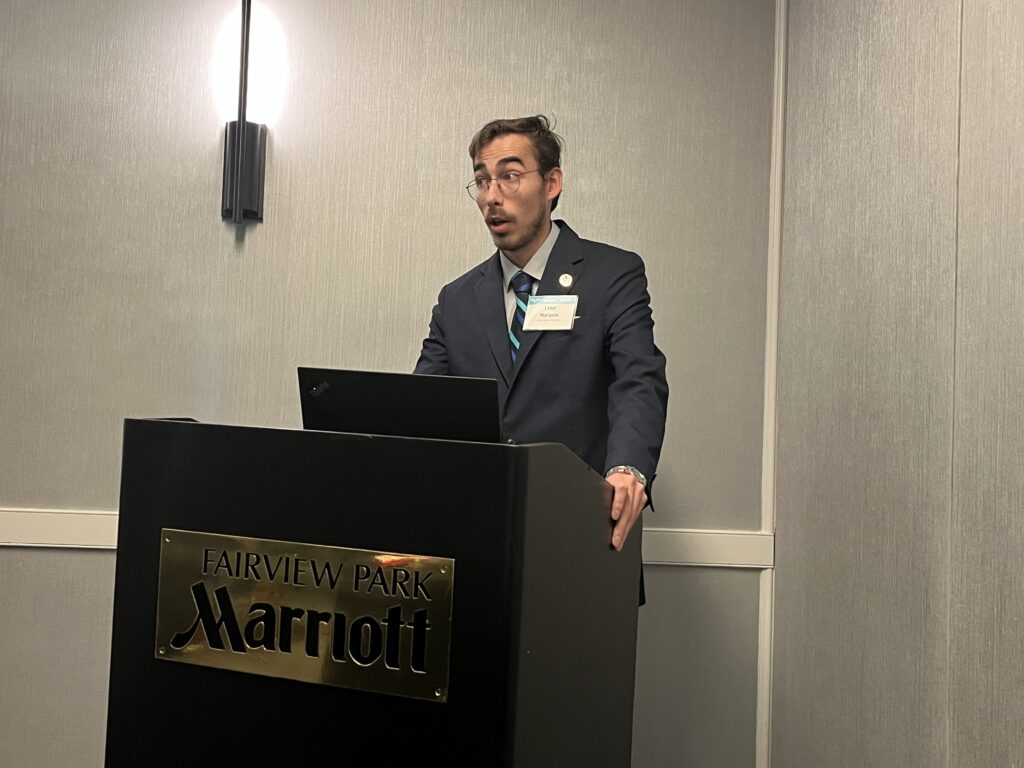
Our first paper was recently completed and is slated for publication in Isonomia Quarterly in July 2026. In the article, discuss whether the future of liberty means uniting the democratic world in an interstate federation (and we argue for the negative, for reasons I think you’ll appreciate. For those interested in the unique intersection of economics and international relations, you can read the full paper for free here.)
Having read Dr. Coyne’s work for years, it’s hard to find words to describe how it feels to go from reading him to writing with him.
But as I write these words here, I have three years left in my program. I ask myself: Would I have been so persistent — so enthralled, so excited — in that program, had I not met Dr. Coyne at LibertyCon? Would I have been able to present myself to him professionally, had I not practiced networking and shaking hands and connecting with people through Students For Liberty?
I doubt it.
Yes, SFL is a place to learn the principles underpinning a free society and the economic arguments that go with them. But I posit that there is a personal element about the people you meet through SFL that’s just as important; maybe more so. Because the friends and colleagues you make along the way are a reward in and of themselves.
P.S. I mentioned I have three years remaining. That’s three years where I’ll be working down the hall from Dr. Coyne. So that journal article we published? It was an incredible learning experience, but it was just a proof of concept. Our next project is a full-fledged book.