Image citation: Silicon Valley, by Zetong Li, licensed under Unsplash
Silicon Valley is a satirical TV show about a group of socially awkward engineers living in Suburban California trying to build a startup into the next big tech company. It plays on the classic “garage startup” mythology that surrounds companies like Apple and Google while humorously exposing the culture, ego, and contradictions of modern Silicon Valley. The show also pokes fun at libertarian leanings in tech, including the idea that innovation should happen with minimal regulation.
It is a heart-warming and hilarious show that touches on a wide range of themes. One of the most compelling is its portrayal of entrepreneurship, not just the excitement and rewards but the constant struggles, setbacks and pressures that come with building something new. It shows how innovation can be both personally challenging and socially beneficial.
The main character, Richard Hendricks, the CEO of Pied Piper, is a great example of why you should not judge a book by its cover. Despite his awkward, introverted demeanor, he embodies the drive, creativity, and resilience that fuel competitive markets. Through him, the show highlights how competition pushes entrepreneurs to innovate, adapt, and ultimately create value for society.
At the start of the show, Richard works as a low-level employee at the tech giant Hooli, run by Gavin Belson, the often dim-witted, self-important antagonist to Richard’s idealism. Bored and frustrated with Hooli’s rigid, bureaucratic corporate culture, Richard quietly develops a side project. After being fired, he finally commits fully to his idea, and a small group of people who recognize his potential join him to build Pied Piper.
The show later reveals that Gavin Belson himself began Hooli in a garage with an old friend, who eventually became both a rival and a billionaire investor. As a young founder, Gavin was ambitious, brilliant, and determined, yet ultimately grew into someone fiercely anti-competitive. In many ways, Gavin and Richard function as mirror images of each other: both are talented, visionary entrepreneurs, but the paths they take and the values they embody diverge sharply.
Gavin is ruthless in protecting Hooli’s monopolistic dominance, willing to sabotage Pied Piper at every turn to preserve his power. Richard, by contrast, consistently prioritizes integrity and his company’s mission over lucrative buyout offers that would compromise or distort his vision. These offers often come with demands to repurpose Pied Piper’s technology in ways that would undermine its stated goals, or eliminate it altogether.
A central part of Richard’s vision is the creation of a decentralized internet. Whether or not such a system is realistic outside the show, within the narrative it represents a challenge to the centralized, corporate-dominated model of the modern internet. A decentralized internet would be more resistant to censorship, harder for large companies to control, and more empowering for users, giving them greater autonomy over their data, identity, and online presence.
One of the most interesting aspects of Silicon Valley is that Richard never originally set out to create a decentralized internet. His initial plan was far more modest: to sell his compression algorithm, a technology that makes digital files smaller and more efficient to store and transmit. He develops this algorithm because he recognizes, through market feedback and investor interest, that there is strong demand for such a tool. This reflects key insights from Hayek and Kirzner.
Entrepreneurs respond to market signals, discovering profitable opportunities by observing what consumers value and where unmet needs exist. That is to say that Richard demonstrated Kirznerian entrepreneurial alertness by paying attention to customer complaints and investors’ questions. He then slowly discovers a profitable opportunity by carrying out rapid and small experiments, tweaking his compression algorithm. Richard, as an entrepreneur, is able to bring together enough dispersed knowledge, to develop his new product helped through market feedback. Pied Piper’s eventual role in the market is the result of a spontaneous order, created by many decentralised decisions, not because the San Francisco local government created it.
As the show progresses, Richard realizes that the compression technology could be used for a much more ambitious purpose: building an entirely new, decentralised internet. This innovation becomes possible through a combination of investment, personal dedication, and the support of a team whose skills complement his own. By surrounding himself with people who are smarter or more capable in specific areas, Richard embodies the principles of division of labour and comparative advantage, enabling Pied Piper to innovate far beyond what he could do alone.
Furthermore, the eventual success of Pied Piper is something to be celebrated. It is often celebrated by various people and institutions. Pied Piper arriving to a point where it finally becomes a large and successful company is very easy to notice. This is what Frédéric Bastiat would refer to as the ‘seen’. However, what is more difficult to notice or the ‘unseen’ is the fact that Pied Piper’s success rests on a foundation of trial and error, market feedback and entrepreneurial insight. This foundation is similar to an iceberg, mostly underwater, it is not immediately obvious to superficial glances. Policymakers and large firms tend to forget the lengthy journey that firms like Pied Piper have to go through, and can make it difficult for them by implementing policies that make it harder for them to grow. This can be unintentional because policymakers simply aren’t aware of the hardships of entrepreneurship and large firms have short memories of their own journey to success.
It can also be intentional from larger firms. Companies like Hooli represent a common problem in real markets. They eventually become so huge and politically connected that it slows innovation in the market rather than contributes to it. It is often cheaper and easier for these firms to lobby for regulations that they can handle with their large inner bureaucracy, but smaller firms would find it more difficult to navigate. Often because they simply do not have the resources and have to redirect resources to deal with the regulations instead of innovating. Bastiat referred to this as ‘legal plunder’ where firms are protecting themselves from competition instead of serving consumers
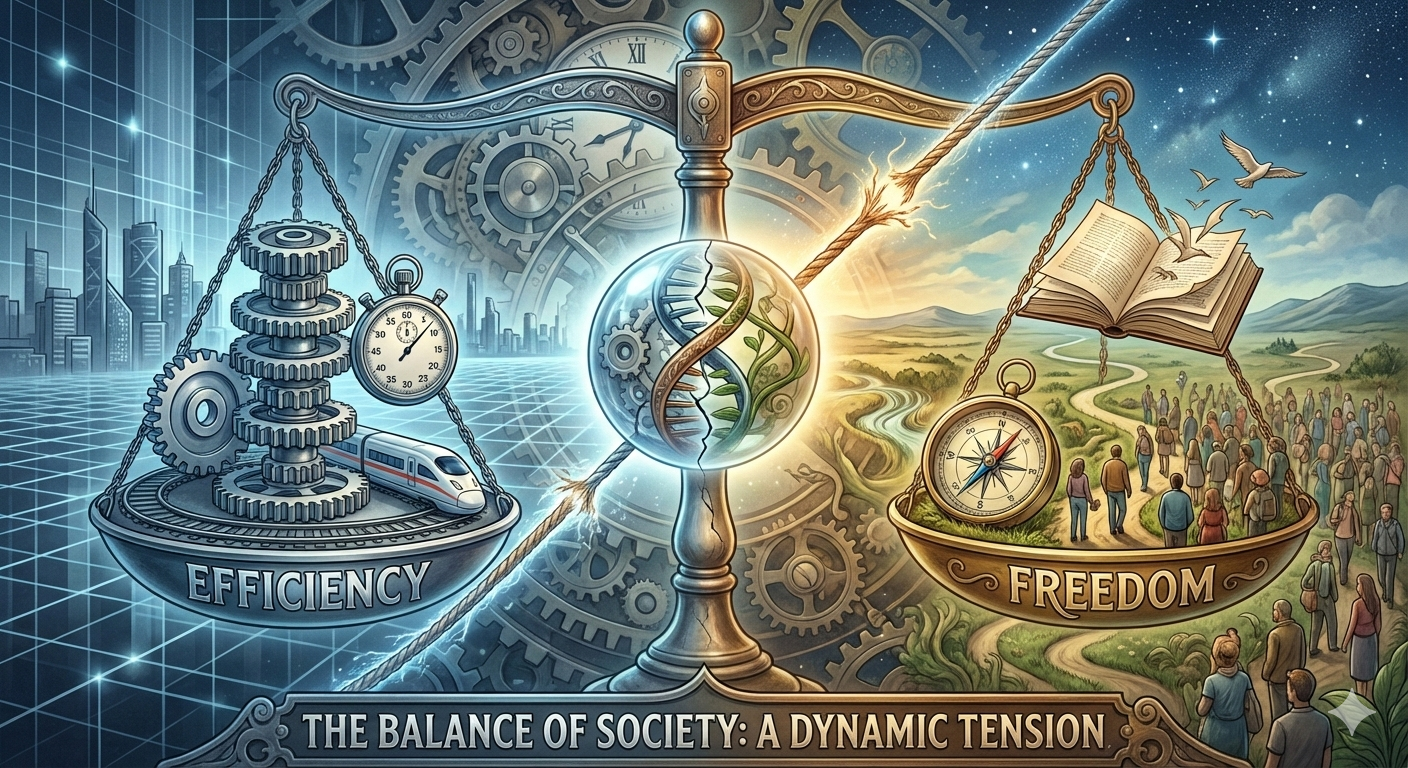
This entrepreneurial process is exactly what marketer and Spectator columnist Rory Sutherland means when he says that capitalism is not primarily about efficiency but about discovery. Innovations rarely emerge from linear, perfectly planned processes. They arise from experimentation, serendipity, and entrepreneurial imagination. Through entrepreneurs like Richard Hendricks, markets continually produce new goods and services that better meet people’s desires, including their desire for greater privacy and freedom from centralized control or censorship. Richard recognizes these emerging preferences and seeks to create a technology capable of fulfilling them.
A decentralized internet would bypass the dominance of companies like Google or Hooli, potentially threatening their business models. This is precisely why Gavin Belson becomes so intent on destroying Pied Piper. The threat Richard poses reflects Joseph Schumpeter’s notion of creative destruction. The constant cycle in which new innovations disrupt established firms. Unless companies innovate, they risk being overtaken by more dynamic competitors. Blockbuster’s failure to adapt allowed Netflix to rapidly surpass it; today, it is difficult to imagine media consumption without Netflix’s model. Similarly, Amazon grew not by remaining a bookseller but by continually reinventing itself through logistics, cloud computing, streaming, and more.
One may never be confident enough to say whether or not a decentralised internet is truly possible. But it is also not impossible. The knowledge required is dispersed throughout society, along with many of the signals an entrepreneur might receive from the market. There is a long history of things once considered impossible and beyond human capacity to create, yet our lives today are filled with them. Look at how small your laptop and phone are while you read this article. Now consider one of the first computers, created by Alan Turing, which occupied much of a warehouse and was loud enough to drown out thought. When we look at our lives and the technologies we own and compare them to most of history, it might be fair to call entrepreneurs magical.
Silicon Valley illustrates how entrepreneurs guided by market incentives, and driven by integrity, can improve the world through innovation. Richard Hendricks becomes, in many ways, an unexpected libertarian hero. He shows that one need not be a grand ideological figure like John Galt to push society forward. Sometimes, all it takes is a spark of entrepreneurial spirit, a willingness to innovate, and a commitment to one’s principles.