• Awards Voting
  • Campus Coordinator Application
  • 2012 ISFLC
  • Webinar

The Latest from SFL

Radley Balko to Speak at ISFLC

Students For Liberty is excited to announce that Radley Balko, senior writer for The Huffington Post, will be speaking at this year’s International Students For Liberty Conference.

Radley Balko is a senior writer for The Huffington Post, where he does investigative reporting on civil liberties and the criminal justice system. Previously he was senior editor for Reason magazine, where he wrote award-winning investigative journalism features and weekly columns on civil liberties. Prior to that, he was a policy analyst for the Cato Institute, where he covered civil liberties and the drug war. From 2002 until 2009, he was also a biweekly columnist with FoxNews.com. He is originally from Greenfield, IN and graduated from Indiana University in 1997 with a BA in journalism and political science.

Radley Balko’s talk, “The Militarization of Main Street,” will discuss the rise of SWAT teams and America’s increasingly reactionary, militaristic approach to policing. Read the full description of his talk, as well as other breakout sessions here.

The Fifth Annual Students For Liberty Conference is coming up quickly! Be sure to register soon, before the deadline THIS FRIDAY, FEBRUARY 3!

Posted in Events, News | Tagged , , , , , , | 1 Comment

“Future of the Dollar” Webinar TONIGHT

Join us tonight at 8PM EST for a webinar discussion led by Mark Calabria over “The Future of the Dollar in the Global Monetary System.”

Wednesday, February 1st at 8pm (Eastern Time)

Topic: “The Future of the Dollar in the Global Monetary System” 

Mark Calabria will talk about the current and future role of the Dollar in the Global Monetary System.  He will discuss what makes a global currency and evaluate the potential for both the Euro and the Yuan as competitors to the Dollar.  In doing so, Calabria will cover the influence of monetary policy on a currency’s value as well as the impact a reserve currency has on domestic industries.  An open discussion will touch upon current challenges facing the Euro zone.

Speaker: Mark Calabria 

Register Here Facebook Event Here

Where? On your Computer

Mark A. Calabria is director of financial regulation studies at the Cato Institute. Before joining Cato in 2009, he spent six years as a member of the senior professional staff of the U.S. Senate Committee on Banking, Housing and Urban Affairs. In that position, Calabria handled issues related to housing, mortgage finance, economics, banking and insurance for Ranking Member Richard Shelby (R-AL). Prior to his service on Capitol Hill, Calabria served as Deputy Assistant Secretary for Regulatory Affairs at the U.S. Department of Housing and Urban Development, and also held a variety of positions at Harvard University’s Joint Center for Housing Studies, the National Association of Home Builders and the National Association of Realtors. Calabria has also been a Research Associate with the U.S. Census Bureau’s Center for Economic Studies. He has extensive experience evaluating the impacts of legislative and regulatory proposals on financial and real estate markets, with particular emphasis on how policy changes in Washington affect low and moderate income households. He holds a doctorate in economics from George Mason University.

Posted in News | Leave a comment

It’s the Free Market… Really

Every first Saturday of the month in Carroboro, North Carolina (Chapel Hill’s hipster outgrowth), an event called “Really Really Free Market” takes place.  Essentially, it is a flea market where everything is free.  People congregate to give away used retail goods, services like haircuts or massages, and goods they have created themselves.  In return, they ask for and expect nothing.

But then, if they want nothing in return, why do they do it?

According to their website,  these are the reasons why:

Because there’s enough for everyone
Because sharing is more fulfilling than owning
Because corporations would rather the landfills overflow than anyone get anything for free
Because scarcity is a myth constructed to keep us at the mercy of the economy
Because a sunny day outside is better than anything money could buy
Because “free trade” is a contradiction in terms
Because no one should have to do without food, shelter, entertainment, and community
Because life should be a picnic, but it only will be if we make it happen
BECAUSE THERE IS TOO SUCH THING AS A FREE LUNCH!

Some of these are based on clear misunderstandings (“scarcity is a myth,” “there is too such thing as a free lunch”), some are hyperbole (corporations don’t want anyone to get anything for free? Can anyone lend me some money to pay for a Google search so I can find out if this is true or not?), and some are simply poetic (“because a sunny day outside is better than anything money could buy”).  One, however, is very enlightening: “sharing is more fulfilling than owning.”

Aha! They say they don’t want anything in return, but they do!  They want fulfillment. They get more utility from giving things away than from keeping them.  One assumes, then, that the corporations and capitalists who take and take and take and never give are saints or angels, allowing others to be fulfilled and yet denying their own fulfillment in some saintly asceticism. The really-really-free-marketeers, on the other hand, are avaricious and predatory, giving away items or services that are not worth  the intense fulfillment they get in return.  Talk about unequal trade:  you get fulfillment and all I get is a haircut?

I’m not here to talk about the economic principles that show why capitalism is in the best interest of everyone, nor am I trying to prove that free market capitalism is the only moral economic system.  Instead, I am just trying to illustrate a simple point: no one does anything selflessly. Ayn Rand called altruism evil; I am calling it fictional.

Trade is ubiquitous in our lives.  Consider having friends over for dinner. They eat your food, use your shelter, and don’t clean their dishes.  But, it isn’t out of selflessness that you have them over. Rather, you enjoy their company.  In return for the dinner, they give conversation, humor, and companionship. My friends and I are trading.

Consider also charity.  If you give money to a cause (Students For Liberty, perhaps?), it is because you have a desire to see the cause promoted.  Giving to charity is very simply an act of satisfying your desires.  Of course, it most likely satisfies the desires of others to a greater extent than it satisfies your own.  And it is probably the case that you desire it only because it satisfies the desires of others.  But in no way do these things diminish fact that you give to charity because it is what you desire.  Satisfying one’s own desires is not selfless—it’s downright selfish.

None of this is meant to bash the Really Really Free Market.  I think it’s a brilliant and beautiful event. It just isn’t what it claims to be.  There is trading going on. Some people get tangible goods, like lampshades or food.  Others get intangible goods, like satisfaction and fulfillment.  I love it for the same reason I like all free trade—everybody wins.

Posted in Blog | Tagged , , , , , , , , | 1 Comment

Women For Liberty Luncheon at ISFLC

We are excited to introduce Women For Liberty, a new project of Alumni For Liberty that will serve as a network of support for pro-liberty women.

Women today face a unique set of circumstances when navigating through academia, career opportunities, and within the liberty movement.  Women For Liberty aims to provide a forum for women to self-organize and connect with a strong network of support as they advance to higher ranks in the liberty movement.

The inaugural event of Women For Liberty is a luncheon at the 2012 International Students For Liberty Conference.  The luncheon is capped at 30 attendees, so hurry and apply!

Registration for the 2012 International Students For Liberty Conference ends on February 3rd.  If you haven’t already, register today!

Posted in News | Tagged , , , , , , | Leave a comment

“The Future of the Dollar” Webinar Tomorrow

Join us tomorrow night at 8PM EST for a webinar discussion led by Mark Calabria over “The Future of the Dollar in the Global Monetary System.”

Wednesday, February 1st at 8pm (Eastern Time)

Topic: “The Future of the Dollar in the Global Monetary System” 

Mark Calabria will talk about the current and future role of the Dollar in the Global Monetary System.  He will discuss what makes a global currency and evaluate the potential for both the Euro and the Yuan as competitors to the Dollar.  In doing so, Calabria will cover the influence of monetary policy on a currency’s value as well as the impact a reserve currency has on domestic industries.  An open discussion will touch upon current challenges facing the Euro zone.

Speaker: Mark Calabria 

Register Here Facebook Event Here

Where? On your Computer

Mark A. Calabria is director of financial regulation studies at the Cato Institute. Before joining Cato in 2009, he spent six years as a member of the senior professional staff of the U.S. Senate Committee on Banking, Housing and Urban Affairs. In that position, Calabria handled issues related to housing, mortgage finance, economics, banking and insurance for Ranking Member Richard Shelby (R-AL). Prior to his service on Capitol Hill, Calabria served as Deputy Assistant Secretary for Regulatory Affairs at the U.S. Department of Housing and Urban Development, and also held a variety of positions at Harvard University’s Joint Center for Housing Studies, the National Association of Home Builders and the National Association of Realtors. Calabria has also been a Research Associate with the U.S. Census Bureau’s Center for Economic Studies. He has extensive experience evaluating the impacts of legislative and regulatory proposals on financial and real estate markets, with particular emphasis on how policy changes in Washington affect low and moderate income households. He holds a doctorate in economics from George Mason University.

Posted in Blog, Events | Tagged , , , , , , , , | Leave a comment

2012-2013 Campus Coordinator Program Applications Open!


SFL is pleased to announce that the application for the 2011-2012 Campus Coordinator Program is now open!

The Campus Coordinator Program is the driving force growing the SFL network and providing resources to students around the world. A Campus Coordinator (CC) is a student leader with three main objectives: to assist student groups in their region, to establish new student groups in their region, and to support the organization of the SFL Regional Conferences.

Last year was the second year of the CC Program with 60 students from 22 different states, 3 Canadian provinces, and one in Venezuela.  This was a 50% increase in leadership from the inaugural year, 2010-2011. The CC Program has been an incredible factor for SFL’s significant growth this past year, and with more CCs in 2012-2013, we intend to reach even more students by providing SFL’s high quality resources and conferences to new regions.  As we often say, we have not yet come close to finding all the pro-liberty students out there.

Members of the CC Program will work with Regional Directors of the Executive Board to establish and implement outreach strategies that are tailored to the unique environment the CC is responsible for. This is a fantastic opportunity for young leaders who enjoy meeting new people, organizing events, and reaching across partisan lines to find new allies in spreading the ideas of liberty.  If you have already achieved success on your campus and want to take your activism to the next level, then this is the program for you.  SFL firmly believes that the college is the ideal location to spark a love of individual liberty and economic freedom, and CCs are a prime force for igniting that passion.

Applications will be accepted on a rolling basis but space is limited. Interested students are encouraged to attend the 2012 International Students For Liberty Conference to meet the current class of CCs and leadership. During June and July accepted CCs will receive training via webinars. This training will culminate with an all expenses paid three-day retreat in Washington DC from July 20-22.

Learn more and apply here: http://studentsforliberty.org/about/apply-for-the-2012-2013-campus-coordinator-program/

If you have any questions about the CC Program please contact Peter Neiger, the SFL Internal Operations Manager atpneiger@studentsforliberty.org.


Posted in News | Tagged , , | Leave a comment

Thoughts on Chris Preble’s “A Libertarian Foreign Policy”

Last Wednesday night, Cato Institute scholar and VP of Foreign Policy Studies Chris Preble delivered a lecture to the Hoyas for Liberty at Georgetown University. His talk, which was streamed live online as part of the Students For Liberty Webinar Series, took on the common claim that libertarian foreign policy proposals lead to a more dangerous world. I found myself mostly in agreement with his analysis of the dangers of overactive foreign policy. He seemed on point in his analysis of military action as the greatest example of the fatal conceit. If we question the ability of the government to accurately and effectively do benign things like provide charity, it stands to reason that they would be even worse in a situation of life and death. Indeed,  issues of perverse interests would be exaggerated a hundredfold by the sheer cost and possible effects of waging war.

Does this make you feel safer?

Chris focused on the overuse of the military and how it harms our freedoms at home and makes our world more dangerous. In short, the assumption that those outside are dangerous and that we should protect ourselves from them leads to the granting the state massive powers to effect that “protection.” The libertarian worldview, on the other hand, is “confident and cosmopolitan,” as Chris put it. Rather than assuming a dangerous world, it sees foreigners as potential trade partners. It presumes other people, instead of seeing them as dangerous and unknown “others.”

The issue is not, however, entirely about the overuse of the U.S. military, but about the underlying nature of foreign policy. Since the reigning assumption is that the individual has no role in foreign policy, this misconception has become the origin of expanding state power. Chris is absolutely right to identify the loss of civilian control of the military as the major issue of the day, but I believe we libertarians should go further. Rather than looking only to oppose the expansion of the state in war, we should look to build alternative institutions that will scale back such expansion for us. This will ultimately drive us toward a minimal state and a peaceful world. What we can do is start to make the focus in foreign policy not on war but trade—cooperative measures, and cultural exchange.

Fluffy, the other reason not to attack Canada

We are not isolationists; we just wish to reach out with trade rather than bombs. Chris quoted George Washington’s famous and incredibly salient call to avoid foreign politics but not foreign trade. After all, trade is the most powerful peacemaker. We would never see a war with Mexico or Canada because our economies are massively integrated. So libertarian foreign policy is not a stagnant or restricted idea. It is not simply the idea that we should support the institution of war less, but rather that we should build something better with which to replace it. We should champion free trade and the further integration of the world economy. Chris briefly referenced embargoes and economic sanctions and the fact that they never seem to work (see: North  Korea and Cuba). Ending practices like this is the big thing we can do to stop the call for war and the assumption that it’s necessary. Chris is absolutely right that the state distributes foreign aid very poorly. Local knowledge and public choice issues are well-known limitations of effective state-based aid schemes. This doesn’t mean, however, that these aren’t important issues in foreign policy. This idea that foreign policy is only what the state does is part of the problem. In an age when the average citizen can interact worldwide, foreign policy is a much more open issue.

We as civilians need to take up foreign policy as a concern, not only by urging state actors to reduce trade barriers and war, but also by engaging in worldwide interactions. By allowing foreign policy to continue to be state actors’ game, we harm worldwide liberty. What the state can do, here and everywhere else, is get out of the way and let the private sector do its work. Let us trade and interact. This is why the rampant protectionism we heard in the State of the Union scared me almost more than the bit about Iran. Although war in Iran would be catastrophic, the trade restrictions proposed by President Obama would brew much, perhaps even more, distain for us abroad. If we can’t have transnational industries and free trade, we will never begin to truly see others as people. Corporations should be doing exactly the opposite of what the President would have them do. We should be importing, sending factories abroad, and working with foreigners—not just because it makes economic sense, but it is the one and only path to a more peaceful world.

Posted in Blog | Tagged , , , , , , | Leave a comment

Introducing ISFLC Master of Ceremonies Gilles Verstraeten

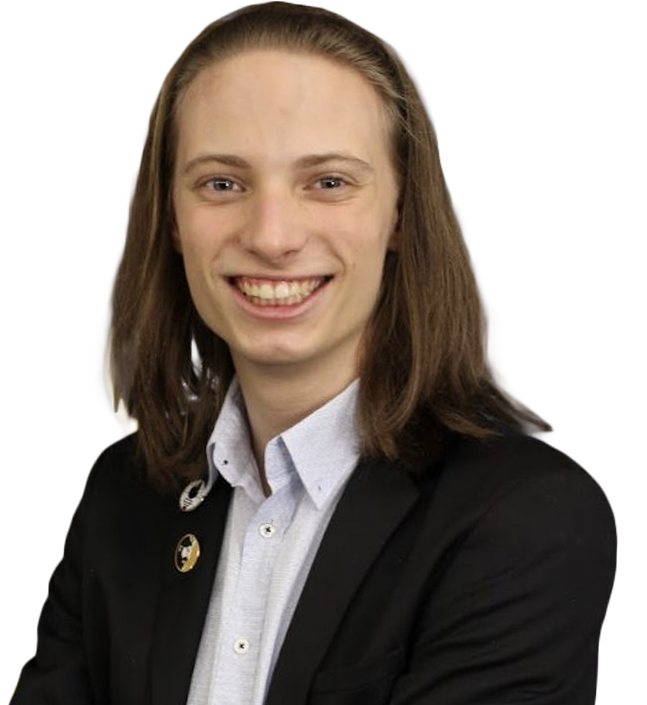
ISFLC Master of Ceremonies Gilles Verstraeten

This year’s Master of Ceremonies at the Fifth Annual Students For Liberty Conference will be Gilles Verstraeten. Gilles is a 22-year old Belgian Law student at the Catholic University of Leuven. In his long-past days a communist and later a politically active moderate classical liberal, he finally found intellectual satisfaction and illumination on his university campus when he joined the LVSV three years ago,  the oldest classical liberal campus student organization in the world. There he was introduced to more radical ideas of liberty and Austrian economics, and discovered inspiring thinkers like Bastiat, Milton Friedman, Hayek and Mises. Three years ago he joined the LVSV executive board, and has served as an editor of LVSV Leuven magazine called Blueprint (Blauwdruk). He is also a member of the political secretariat, and is currently PR & Communications Manager for LVSV. Besides being a board member of the LVSV, Gilles is also active in the Belgian Youth Parliament, a yearly simulation that takes place in the Belgian Senate, as leader of the classical liberal faction. There he aims to defend and pass legislation that will abolish inheritance taxes, reform the social security system and legalize drugs.

Gilles’ mother tongue is Dutch, as he comes from the Flemish part of Belgium, a country that has three official languages (Dutch, French and German). Besides Dutch, he also speaks English and French. In his spare time, Gilles likes to sing, and has performed on stage from time to time, also making a theme song (on the basis of “We’ll Meet Again”) for the first European Students for Liberty Conference, which was hosted by LVSV Leuven.

The Master of Ceremonies for the International Students For Liberty Conference has many responsibilities including running general sessions, keeping attendees informed of conference announcements, and keeping the conference lively and running on time. We’re very excited to have Gilles Verstraeten fill this role!

The registration deadline for the Fifth Annual Students For Liberty Conference is this FRIDAY, FEBRUARY 3. Register today!

Posted in News | Tagged , , , , , , , , | Leave a comment

Nick Roskams inspires thousands of students to stand up for reform

Nick Roskams, Belgian ESFL Board member and Vice-President of LVSV Leuven, wrote a letter in reply to Rudy de Leeuw, the leader of the National Belgian Socialist Union, that has caused an intellectual riot in Belgium. It has been “liked” by 12,000 students from all across the political spectrum, and been picked up by media outlets across the country.

As in most European countries, the current financial and public debt crisis is a hot topic in Belgium, and is starting to profoundly influence public debate. The newly formed Belgian government recently decided to go through with a pension reform plan that, amongst other things, increases the retirement age. This is just part of a larger plan to make the social security system more sustainable and reduce the growing public debt by implementing various austerity measures. According to the government, this decision was necessary to ensure that our generation would not fall victim to the current system. Trade unions went on strike this past December to protest the plan, and called for a national strike today that will hold the country in deadlock.

Remarkably, increasingly large numbers of young people from all across the political spectrum are speaking out against the behavior of the unions, and their unwillingness to contribute to solving Belgium’s problems. The unions are being heavily criticized for rigidly clinging to the existing, and untenable, social security system. At first the unions shrugged off their critics by paternalistically claiming that students were being shortsighted and sultry because public transport, which has a huge impact on the mobility of young people in Belgium, is going on strike as well. However, criticism of the unions continues to grow and young people are using Twitter and Facebook to demand that the older generation take responsibility to reduce the debt that will eventually end up falling on our generation. Young people are protesting more and more because they fear that they will become double victims of the current unsustainable system. If the system remains unchanged it could easily collapse in 10 to 20 years and leave payers of some of the highest taxes in the world without any of their promised social benefits. Additionally, our generation would inherit a huge public debt, which is reaching a whopping 100% of GDP and continually increasing. LVSV (Flemish Classical-Liberal Student Association) board members from across Flanders have been helping to lead this student movement by setting up highly supported Facebook groups against the national strike.

President of the Socialist Union (ABVV), Rudy de Leeuw, tried to respond to this increasing hostility by campaigning on Twitter using the hashtag “#30J” (referring to the date of the strike). The plan backfired almost immediately. The hashtag was picked up by his critics and trended on a global scale because of the flood of students’ angry reactions against the unions. Mr. de Leeuw attempted a charm offensive and wrote a letter addressed to students that paternalistically claims that the Socialist Union is concerned for their future and is trying to defend their rights against “neoliberal austerity measures”. It stated that their fight was just as much ours. Many feel that the letter failed to address students’ concerns and merely claims that students are incapable of seeing the importance of the unions’ actions.

Outraged by the arrogance of the unions, Nick Roskams wrote a lengthy reply to Mr. De Leeuw’s letter, pointing out that the unions have become powerful institutions with vested interests that cannot claim to represent students, who are the victims of a rigid labor market and an untenable tax and social system. It made some very ad rem suggestions that the unions should return to their original principles and work on a more voluntary basis to provide social security for their members. Nick posted his letter on Facebook Wednesday morning and asked people who agreed with its message to “like” the letter. The letter was spread and shared on Facebook by LVSV members hoping to spark some interesting discussion. Everyone was caught off guard and completely baffled by the results. After being online for only 5 hours, more than 2,500 students had “liked” the letter, with the number of “likes” swelling exponentially. The number has now increased to a mind-blowing 12,000 “likes”, representing 0.19% of the Flemish population, and is still growing. The letter has become the talk of the town not only on Facebook and Twitter, but also in the media (Knack.beDeMorgan.be, and Standaard.be). Nick was also interviewed on the radio and national television, appeared on a widely watched debate program of the Flemish broadcasting company this Sunday, and sat down with the trade unions and their employers.

The letter set off a chain reaction: LVSV members all across the country are taking action, despite being in the middle of exams. Dimitri Van den Meersche, a member of LVSV Ghent, has been invited to discuss the future of the unions and the Belgian social system in a panel debate involving some of Belgium’s most eminent public intellectuals; Mattias de Vuyst, another LVSV Ghent member who started a popular anti-strike page, has been invited by the unions themselves to discuss the whole affair in an informal setting. A shorter pamphlet based on Nick’s letter was made and signed by prominent past board members of LVSV and gained wide support from other political youth organizations. The pamphlet will be spread amongst citizens and strikers today to encourage further discussion and awareness. For example, LVSV Antwerp has pledged to print a thousand copies of the pamphlet and make them available in Antwerp’s main train station, where they expect strikers to be posted. It is becoming such a huge phenomenon that the unions can no longer evade a sincere discussion about the legitimacy of their actions, and it has ignited a debate that is influenced by more classical liberal ideas.

It is encouraging that growing numbers of young people are no longer buying the unions’ false promises and are rejecting the unions’ arrogant claims that they have an inherent right to speak on behalf of all Belgians. It also indicates that libertarians need not crawl into their ideological corner. We are perfectly capable of influencing public debate by taking a stand on important issues, and perhaps even winning widespread public support. This week has truly been a victory for libertarians in Belgium. Our message is spreading like wildfire and forcing the unions to think twice before they ever claim to represent all of us again.

This post was written by Gilles Verstraeten. Gilles is studying Law at the Katholieke Universiteit Leuven and a board member of LVSV Leuven.

Posted in News | Tagged , , , , , , , | 1 Comment

“The Future of the Dollar” Webinar Next Wednesday

Be sure to join us next Wednesday, February 1, for a webinar with Mark Calabria of the Cato Institute. He’ll be discussing “The Future of the Dollar in the Global Monetary System.”

Wednesday, February 1st at 8pm (Eastern Time)

Topic: “The Future of the Dollar in the Global Monetary System” 

Mark Calabria will talk about the current and future role of the Dollar in the Global Monetary System.  He will discuss what makes a global currency and evaluate the potential for both the Euro and the Yuan as competitors to the Dollar.  In doing so, Calabria will cover the influence of monetary policy on a currency’s value as well as the impact a reserve currency has on domestic industries.  An open discussion will touch upon current challenges facing the Euro zone.

Speaker: Mark Calabria 

Register Here Facebook Event Here

Where? On your Computer

Mark A. Calabria is director of financial regulation studies at the Cato Institute. Before joining Cato in 2009, he spent six years as a member of the senior professional staff of the U.S. Senate Committee on Banking, Housing and Urban Affairs. In that position, Calabria handled issues related to housing, mortgage finance, economics, banking and insurance for Ranking Member Richard Shelby (R-AL). Prior to his service on Capitol Hill, Calabria served as Deputy Assistant Secretary for Regulatory Affairs at the U.S. Department of Housing and Urban Development, and also held a variety of positions at Harvard University’s Joint Center for Housing Studies, the National Association of Home Builders and the National Association of Realtors. Calabria has also been a Research Associate with the U.S. Census Bureau’s Center for Economic Studies. He has extensive experience evaluating the impacts of legislative and regulatory proposals on financial and real estate markets, with particular emphasis on how policy changes in Washington affect low and moderate income households. He holds a doctorate in economics from George Mason University.

Posted in E-Leadership, Events | Tagged , , | Leave a comment