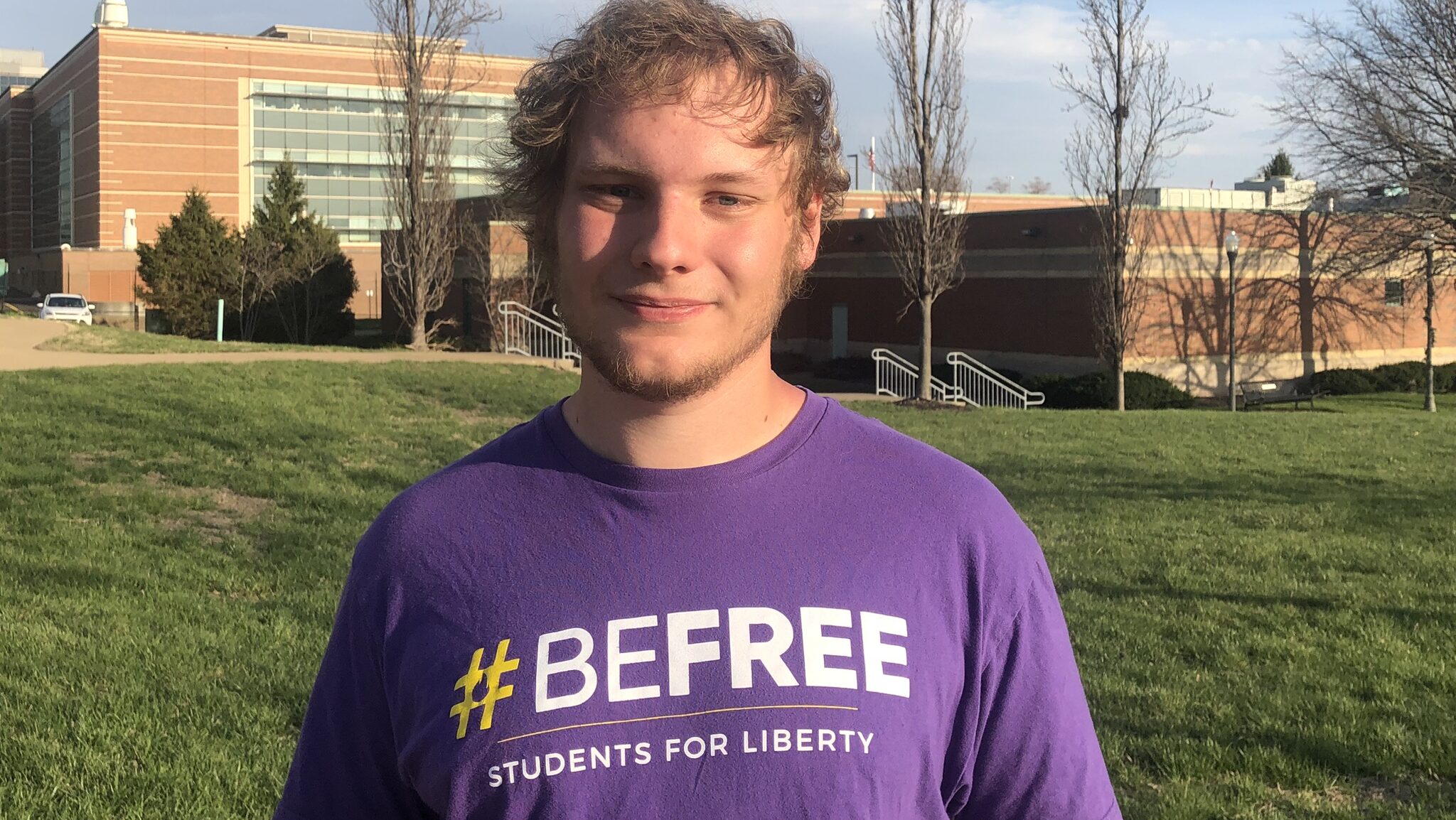
By Cameron Westbrook
I was never quite sure where I fit in.
Growing up in Slidell, Louisiana, across Lake Pontchartrain from New Orleans, I’d always been driven, eager to learn, curious about the world … and my parents would be quick to add: fiercely independent.
As I got older, those traits led to an interest in individual rights and free markets, but I could never see how that could be anything more than an interest; I certainly didn’t see how it might translate into a community or a career.
Everything changed when I attended the Restoring Justice Summit at Tulane University. It was my first Students For Liberty event.
I walked in with a few guesses of what to expect: Smart, maybe slightly nerdy people presenting charts, studies, and data. Perhaps some bearded, Gadsden-flag-flying guys from rural Louisiana. Probably some lawyers who were a little too sure of themselves.
But what I found was so different from what I had expected: There was this atmosphere of genuine, intellectual curiosity and principled discussion. The people there — and they were far more diverse than I had expected, by the way — were, above all, there to learn, not to preach.
We heard from speakers committed to reforming the criminal justice system and advancing human freedom, but more importantly, I connected with other students who shared my interests. Many of them were asking the same question I was: How do we turn these principles into real-world impact?
That summit was my introduction to Students For Liberty and a portal into the broader world of pro-liberty thought. Jack Nicastro once called it “the door to Narnia” (you can learn about his story here):
And I’m happy to report: I walked right through that door and haven’t looked back.
For a few years, I worked in nonprofit advocacy, lobbying at the Louisiana Capitol and organizing volunteers in my region as part of broader statewide campaigns. Our work covered sentencing reform, compensation for wrongful convictions, qualified immunity, and marijuana legalization.
We had meaningful victories, but we also experienced plenty of setbacks. One was the legalization bill I supported through direct lobbying and grassroots organizing. That bill failed. A separate marijuana decriminalization bill passed around the same time — a welcome development, though one our campaign hadn’t worked on.
Those experiences taught me something about both advancing liberty and finding my own place in that work. Legislative advocacy is essential, and some of the achievements I’m proudest of came through that process. But working in Louisiana politics could also be demoralizing. Good arguments and committed volunteers didn’t always carry the day, and even a hard-won reform could be undone by a future legislature or governor.
I began to see why a movement committed to liberty needs people with different skills working across every branch of government. We need organizers, policy experts, and advocates making the case for reform. We also need lawyers enforcing the constitutional limits on government power — limits that protect individual rights even when those rights are politically unpopular.
I respected the people who could keep fighting in the legislative arena. But I was beginning to realize that my own future might lie in the courtroom. As I considered that future, SFL helped me see a way forward.
I forget how, exactly, but I was invited to and attended an SFL training in Michigan. That’s when my path to law school really began. It was also there that I began to understand what made Students For Liberty unique and why they deserved my full attention and support (and why I think they deserve yours, too).
At the retreat, I met students and leaders from across the country who were not only passionate about liberty but also driven to make a difference on their campuses and beyond.
Over those few days, I began to feel like I was truly part of a broader movement — a feeling that was new to me. I was reinvigorated, and those late-night conversations in Michigan — whether about philosophy, strategy, or future plans — helped shape my thinking about how I wanted to contribute. More specifically, it planted the seed that law school might be where I could make the biggest impact.
That training helped turn a growing interest in law into a concrete direction. I went on to attend the University of Denver’s Sturm College of Law, where I continued my involvement with SFL as a Local Coordinator.
A coordinator position is what you make of it: The more you put into it, the more you get out. And I don’t mean to brag, but I’m proud of what I’ve done, from organizing events on campus to my biggest criminal justice victory: passing unanimous juries legislation in Louisiana.
Before the ballot initiative on this issue, Louisiana was one of two states (the other was Oregon) that didn’t require unanimous jury verdicts. It’s impossible to say if there’s a direct, causal connection between the two, but after the ballot initiative passed, the Supreme Court ruled that jury verdicts must be unanimous in all states.
To support that initiative, I led one of several groups of volunteers in sending texts to a targeted list of Louisiana voters, making the argument to them that justice is better served when someone can only be convicted (or acquitted, for that matter) by a unanimous verdict.
More recently, I joined House Bastiat, the group of policy wonks within SFL who focus on law and public policy. Being part of House Bastiat has helped me connect with other coordinators across the country, share ideas, and stay motivated to contribute to the movement. Because as Ethan Yang said, “Changing the world is a lot more fun when you’re doing it with friends.”
But they’re more than fun. The people of SFL, and the organization as a whole, have been a central part of my journey to law school and, now, into the legal profession.
The connections I made through SFL have given me opportunities I wouldn’t have found otherwise — attending events, networking with legal professionals, deepening my understanding of the ideas that drive my work — and, above all, they’ve reminded me again and again: Having strong opinions is easy. Finding a useful way to act on them takes work.
SFL also gave me something less tangible but just as valuable: an intellectual anchor. In legislative work, you’re constantly dealing with political pressures and practical compromises. Those compromises are sometimes necessary, but it helps to have a community into which you can step back, examine your assumptions, and remember what you’re trying to accomplish. The people I met through SFL gave me opportunities to discuss — and often disagree about — the principles behind our work.
That remained valuable in law school. Learning to think like a lawyer means immersing yourself in doctrine, precedent, and legal reasoning. I loved that work, but SFL helped me keep sight of the people and principles that had drawn me to it in the first place.
A lawyer’s responsibility is fidelity to the Constitution and the law. SFL also helped me deepen my understanding of liberty while reminding me why I wanted to enter the profession: to help people whose rights are threatened by government power.
I’m no longer “not quite sure where I fit in.” I’ve graduated from law school, and as I prepare to be sworn in as a lawyer, I’m beginning a litigation fellowship with Pacific Legal Foundation — my dream job — helping protect property owners from government overreach.
Since I began law school, I’ve also watched Louisiana roll back criminal justice reforms under a new administration. Seeing that has reinforced the lesson I took from my earlier work: Advancing liberty requires both changing policy and protecting the constitutional rights that political majorities must respect.
Legislative work helped me discover that defending those rights is where I want to devote my career. SFL helped me explore that calling and build relationships with people pursuing their own ways of advancing freedom.
That is what makes the SFL community valuable. There is no single career path for someone who cares about liberty. Students need opportunities to encounter new ideas, meet people doing meaningful work, and discover where their own abilities can make a difference. SFL gave me those opportunities. And so, as I prepare to enter the legal profession, I want to help other students find their direction, too.